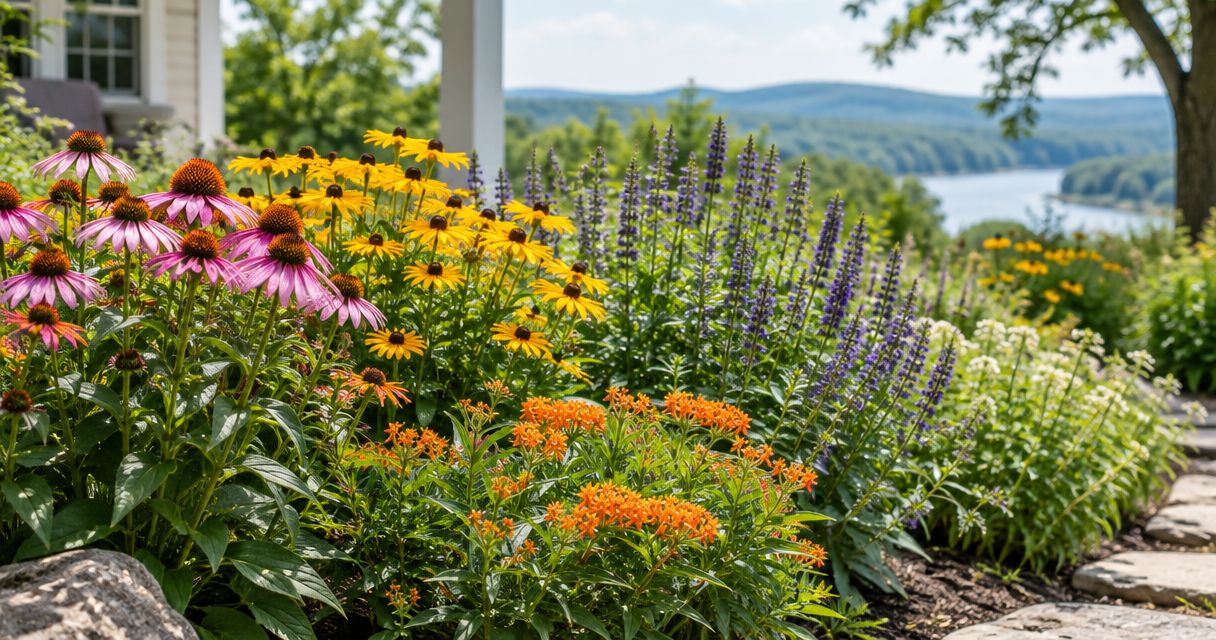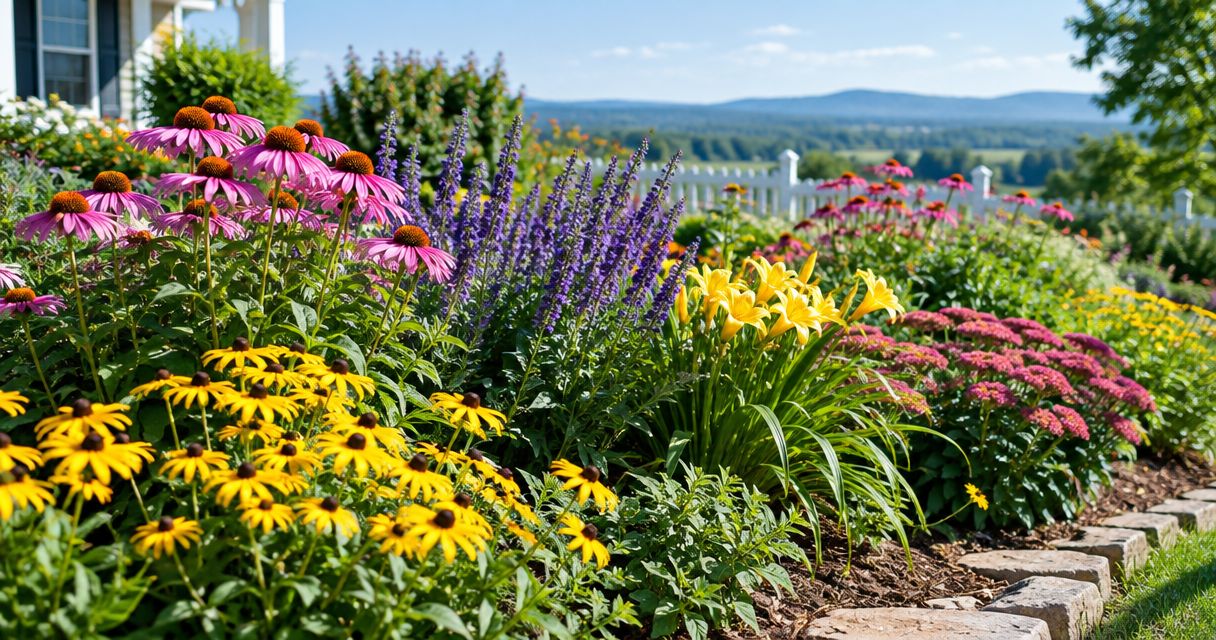
Best overall: purple coneflower for a sunny Virginia border with well-drained soil. Best for a dry site: butterfly weed. Best for fall flowers: New England aster. These are the best perennials for full sun in Virginia to compare in 2026 because each solves a different planting problem; none is the right choice for every sunny bed.
- Purple coneflower is the best overall perennial for a full-sun Virginia border with well-drained soil.
- Butterfly weed suits dry, well-drained sites; New England aster brings late-season flowers to beds with more moisture.
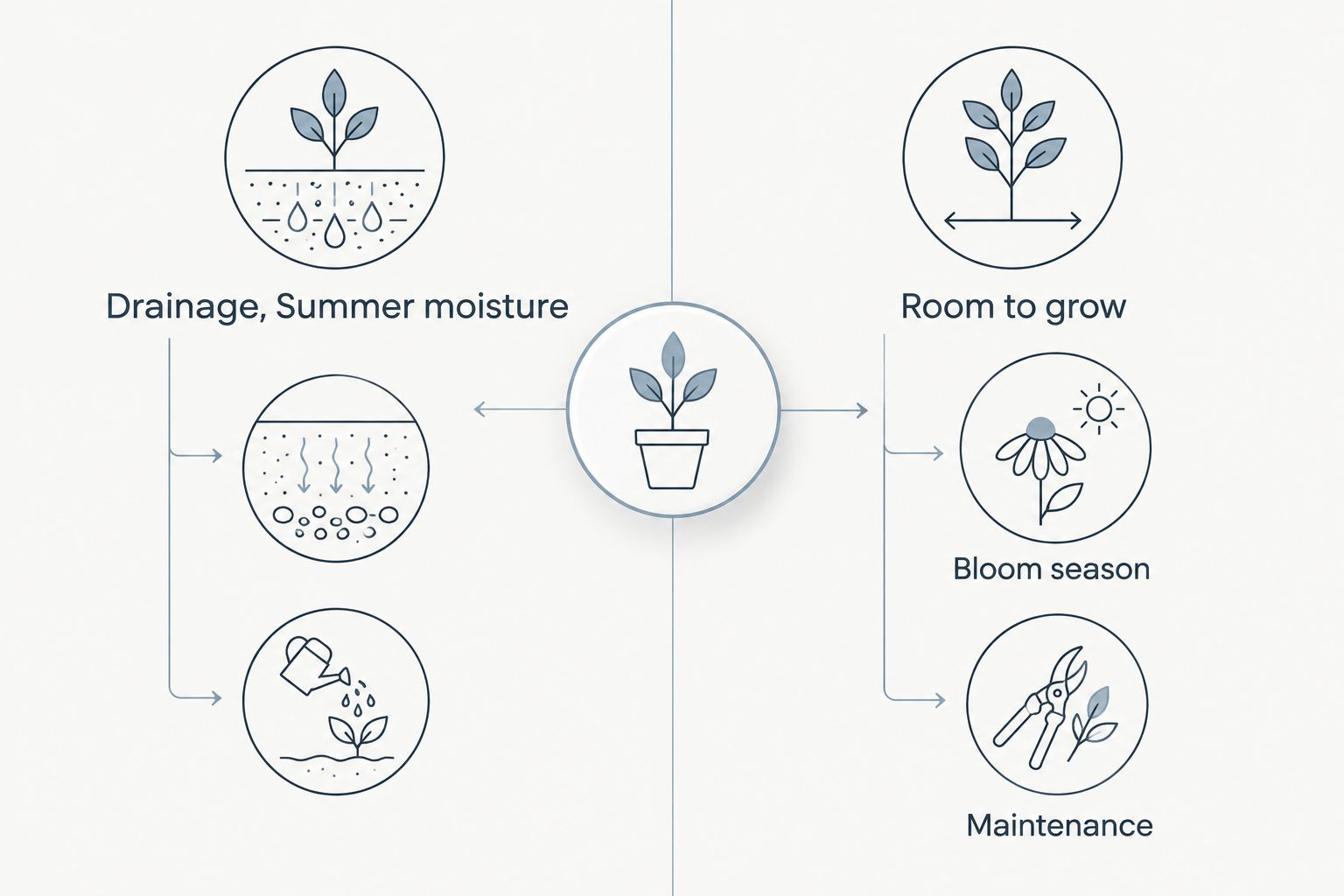
- The best perennials for full sun Virginia gardens depend on drainage, summer moisture, space and bloom season.
- Check current stock before looking for a named species as a flower plug.
Why this matters in a Virginia garden
Full sun generally means at least 6 hours of direct sunlight a day. That tells you how much light a bed gets, but not whether its soil stays damp after rain or dries out between watering. Those differences change which perennial will settle in with less intervention.
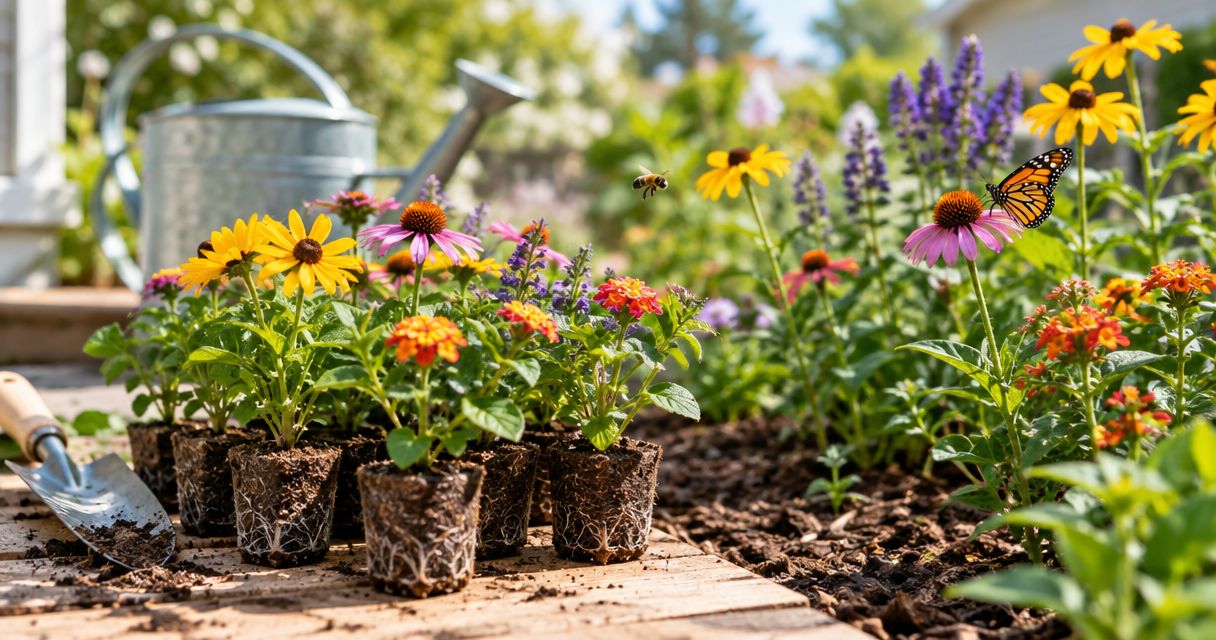
In 2026, start by watching the site after a soaking rain and again during a hot, dry stretch. For a current look at flower plugs and perennials, check Meadows Garden Company; do not assume any species in this guide is stocked. A plug is a young plant with an established root system, not a packet of seeds or a mature flowering plant. Give it the growing conditions it needs while it establishes.
What makes the best full-sun perennial for Virginia?
- Drainage: Butterfly weed and baptisia need soil that does not stay waterlogged. A sunny spot that holds standing water is not automatically suitable.
- Summer moisture: New England aster and wild bergamot need more attention in a bed that dries quickly than butterfly weed does once established.
- Room to grow: Check the mature width on the plant label. Crowding makes later maintenance harder, especially for plants susceptible to powdery mildew.
- Bloom season: Combine summer bloomers with a fall-flowering aster rather than expecting one perennial to carry the bed all season.
- Maintenance: Decide whether you can water new plantings, divide spreading clumps or leave sturdy stems standing through winter.
A 2026 planting plan should start with those site checks, not a flower-color preference. If the bed has both dry and moisture-retentive areas, place each species in the part that fits it instead of treating the whole bed as one condition.
Full-sun Virginia perennials at a glance
| Perennial | Best for | Standout feature | Key limitation |
|---|---|---|---|
| Purple coneflower (Echinacea purpurea) | A mixed sunny border | Summer flowers with prominent seed heads | Needs good drainage |
| Black-eyed Susan (Rudbeckia fulgida) | A long summer display | Yellow flowers that combine easily with other perennials | Clumps can spread beyond their allotted space |
| Butterfly weed (Asclepias tuberosa) | A dry, well-drained bed | Orange flowers on a Virginia native milkweed | Dislikes wet soil and root disturbance |
| Baptisia (Baptisia australis) | A permanent garden anchor | Upright spring flowers and substantial foliage | Takes time and space to establish |
| Wild bergamot (Monarda fistulosa) | A pollinator-focused planting | Summer flowers that attract visiting insects | Powdery mildew is a common concern |
| New England aster (Symphyotrichum novae-angliae) | Fall flowers | Late-season blooms | Needs room and suitable moisture |
1. Purple coneflower: best overall for a mixed sunny border
Purple coneflower fits a full-sun border where the soil drains well and you want flowers alongside other perennials. Its upright stems and seed heads also give the bed structure after flowering. It is not a fix for a low spot that stays wet.
Purple coneflower pros:
- Summer flowers work in a mixed planting rather than requiring a dedicated bed.
- Seed heads can remain standing after bloom for winter texture.
- The upright shape is easier to place among lower-growing companions.
Purple coneflower cons:
- Persistently wet soil is a poor fit.
- Young plants still need watering while roots establish; full sun does not remove that need.
Best for: A gardener with a sunny, well-drained border who wants a flexible starting plant. Verdict: Buy for that site; skip it where water collects after rain.
2. Black-eyed Susan: best for a long summer display
Rudbeckia fulgida brings yellow flowers to a sunny bed and pairs naturally with plants that flower earlier or later. It is a useful choice when you want the planting to look active through summer without selecting every companion for the same bloom window. Give its clump room rather than squeezing it between plants at their mature widths.
Black-eyed Susan pros:
- Yellow flowers provide a clear contrast with purple-flowering perennials.
- Established clumps can fill space in a mixed border.
- It works alongside fall-flowering plants without asking them to bloom at the same time.
Black-eyed Susan cons:
- A clump that expands beyond its space needs division or editing.
- Leaf diseases can affect its appearance, particularly where foliage stays crowded and damp.
Best for: A gardener who wants a noticeable summer display and can maintain an expanding clump. Verdict: Buy if you have space to manage it; hold if the bed is already crowded.
3. Butterfly weed: best for a dry, well-drained bed
Butterfly weed is a Virginia native milkweed suited to full sun and freely draining soil. Its orange flowers suit a dry planting, but its site requirements matter more than its color. Do not place it in heavy, persistently wet ground simply because the bed gets sun.
Butterfly weed pros:
- Suits a sunny site that dries between rains once established.
- Adds a distinct orange bloom to a mixed perennial bed.
- As a milkweed, it serves as a host plant for monarch caterpillars.
Butterfly weed cons:
- Wet soil is a serious mismatch.
- Its deep root makes established plants difficult to move successfully.
Best for: A gardener with a dry, well-drained spot who can choose a permanent position before planting. Verdict: Buy for that site; skip it for a bed that stays soggy. In a 2026 garden plan, mark its location so late-emerging spring growth is not mistaken for an empty space.
4. Baptisia: best for a permanent garden anchor
Baptisia australis is a long-lived perennial with upright spring flowers and foliage that remains useful after bloom. It belongs where you can let it develop into a substantial plant rather than shifting it as you rearrange a small bed. Full sun and good drainage give it a better start than a cramped, wet position.
Baptisia pros:
- Spring flowers extend the bed's interest before the summer bloomers take over.
- Foliage gives a border shape after the flowers finish.
- An established plant does not need routine division to remain part of the design.
Baptisia cons:
- It is a poor choice where you need an immediate, full-looking planting from a small young plant.
- Its mature size and root system make later relocation difficult.
Best for: A gardener planning a permanent sunny border with room for the plant to mature. Verdict: Buy if you can give it that space; wait if the bed's layout is still changing.
5. Wild bergamot: best for a pollinator-focused planting
Wild bergamot, Monarda fistulosa, is a Virginia native perennial with summer flowers that draw visiting insects. Put it in a sunny planting where air can move around the stems. It is a less comfortable fit for a tightly packed bed where damp foliage lingers.
Wild bergamot pros:
- Its flowers add a different shape to a mixed planting.
- It supports a pollinator-focused garden without needing to be the only flowering species.
- It pairs well in a plan that includes spring and fall bloomers.
Wild bergamot cons:
- Powdery mildew can visibly coat leaves, especially in crowded conditions.
- It needs more moisture attention in a very dry site than butterfly weed does.
Best for: A gardener who wants summer flowers for visiting insects and can allow airflow around the plants. Verdict: Buy for a suitably spaced bed; hold if dry soil and crowding are unavoidable.
6. New England aster: best for fall flowers
New England aster extends a sunny border into fall, when many summer-flowering perennials are past their peak. It is not the default for a small, dry corner: give it room, and account for moisture during establishment and dry spells. Use it to complete a sequence of bloom rather than expecting it to supply the summer display.
New England aster pros:
- Flowers later than the spring and summer picks in this guide.
- Adds a clear fall destination for visiting pollinators.
- Combines with earlier bloomers without duplicating their main season.
New England aster cons:
- Its mature growth needs space in the border.
- A hot, dry site can demand more watering than a well-matched dry-site perennial.
Best for: A gardener with room for late-season flowers in a sunny bed that does not remain parched. Verdict: Buy to fill a fall gap; skip it if you only have a small, persistently dry spot.
How to plant young perennials in full sun
Choose the location from the plant's mature requirements, then prepare a hole that accommodates the plug's root ball without burying its crown. Set the plant at the same soil level it grew at in its container, firm the surrounding soil gently and water it in. Check the root zone regularly while it establishes; a newly planted plug cannot rely on the drought tolerance of a mature plant.
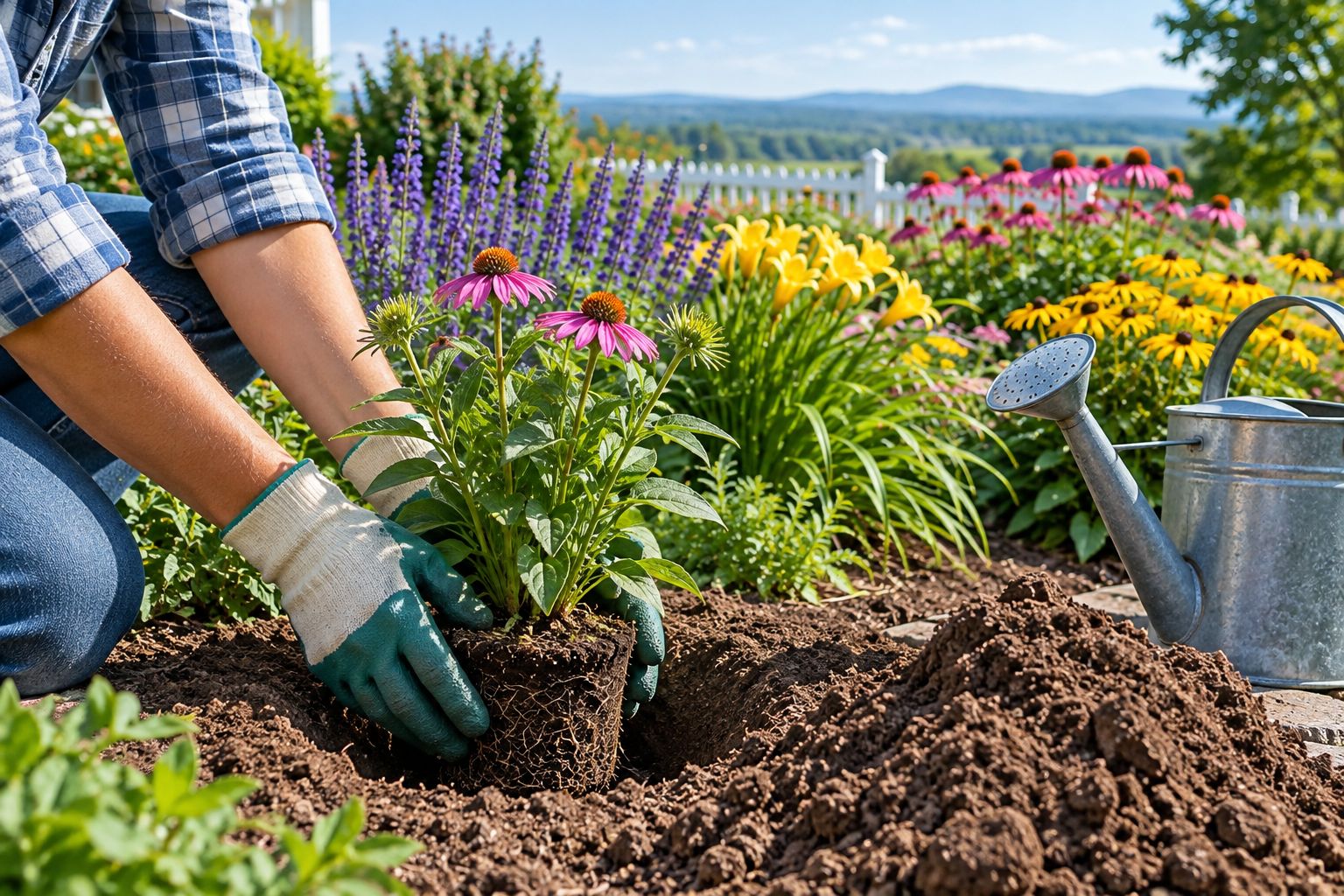
A layer of mulch about 2 inches deep helps cover bare soil, but keep it clear of the plant's crown. Use your soil, not a fixed calendar, to guide watering. The commonly used garden target of about 1 inch of water per week includes rainfall; new plugs and exceptionally hot conditions require closer checks at the root zone.
For spring planting in 2026, check your local last-frost outlook rather than using a single date for all of Virginia. Craig County and other higher-elevation sites do not follow the same warming pattern as every lower-elevation garden. Harden off plants raised under protection before placing them in exposed sun and wind, and follow the care guidance for the specific plant you receive.
How these picks were ranked
The 2026 ranking puts site fit ahead of flower color. Purple coneflower wins the general mixed-border slot; butterfly weed wins a dry-site slot; New England aster wins when fall bloom is the missing piece. Drainage, summer moisture, mature space, bloom season and maintenance determine the other placements. These are planting recommendations, not claims that every species is available to order.
Which full-sun perennial should you choose?
Choose purple coneflower as the default if your sunny Virginia bed drains well and you want a mixed border. Choose butterfly weed instead when the site is distinctly dry, baptisia when you have room for a permanent anchor, or New England aster when the bed needs fall flowers. In 2026, make the final choice from the conditions in your own bed and the current plant label, not from sunlight alone.
FAQ
What are the best perennials for full sun in Virginia?
Purple coneflower is a useful overall choice for a well-drained sunny border. Butterfly weed suits a drier site, while New England aster supplies fall flowers where there is room and suitable moisture.
How many hours of sun does a full-sun perennial need?
Full sun generally means at least 6 hours of direct sunlight a day. Check whether buildings or trees shade the bed during the growing season, then assess drainage separately.
Which Virginia perennial works in a dry, sunny bed?
Butterfly weed suits a dry, well-drained sunny bed once established. Water a newly planted specimen while its roots establish, and avoid a site that stays wet.
Can I plant perennial plugs straight into full sun?
Plant perennial plugs in full sun when the species suits the site and the young plants have been hardened off if raised under protection. Water the root zone during establishment instead of treating a plug like a mature plant.
Which full-sun perennial flowers in fall in Virginia?
New England aster is a fall-flowering choice for a sunny Virginia garden. Allow for its mature size and check moisture during dry weather.
Is butterfly weed better than purple coneflower for dry soil?
Butterfly weed is the clearer choice for a dry, freely draining spot. Purple coneflower is the more flexible pick for a mixed sunny border that drains well.
Does Meadows Garden Company stock these perennials in 2026?
Check the current Meadows Garden Company catalog for species and plug availability. A recommendation in this guide does not confirm that a named plant is in stock.
One last thing
A bed can receive full sun and still fail a dry-site perennial if water lingers around its roots. Before buying plants for a 2026 planting, check the soil after rain; that single observation can rule out a poor match faster than a list of flowers can.