Best overall: Christmas fern for an evergreen Virginia shade garden. Best for spring flowers: woodland phlox. Best for damp groundcover: golden ragwort. The best perennials for shade in Virginia depend less on how dark the site looks than on whether the soil stays moist, drains well, or dries out beneath trees.
- Christmas fern is the best overall perennial for Virginia shade when you want evergreen foliage in well-drained soil.
- Woodland phlox is the spring-flowering pick for partial shade; Virginia bluebells suit moist sites but disappear in summer.
- Golden ragwort covers damp ground quickly; choose American alumroot where a tidy clump matters more than spread.
- Match shade perennials to soil moisture before choosing between plugs, seeds, and mature plants.
Meadows Garden Company sells flower plugs, native plants, and perennials to Virginia gardeners. Use this guide to choose a species for your site, then check the current catalogue rather than assuming a recommended plant is in stock.
Why shade and soil moisture matter
A bed beneath a leafy tree can be shaded and dry: its roots compete with perennials for water. A low spot shaded by a building can be just as dark but stay wet after rain. Those sites need different plants. Assess moisture first, then choose for flowers, foliage, or groundcover.
In 2026, the useful starting point is still a simple site check. Look at the bed in the morning and afternoon, and check the soil a few inches down after rain and again during a dry spell. Full shade receives little direct sun; partial shade receives some, often in the morning or late afternoon. Neither label tells you how much water reaches the roots.
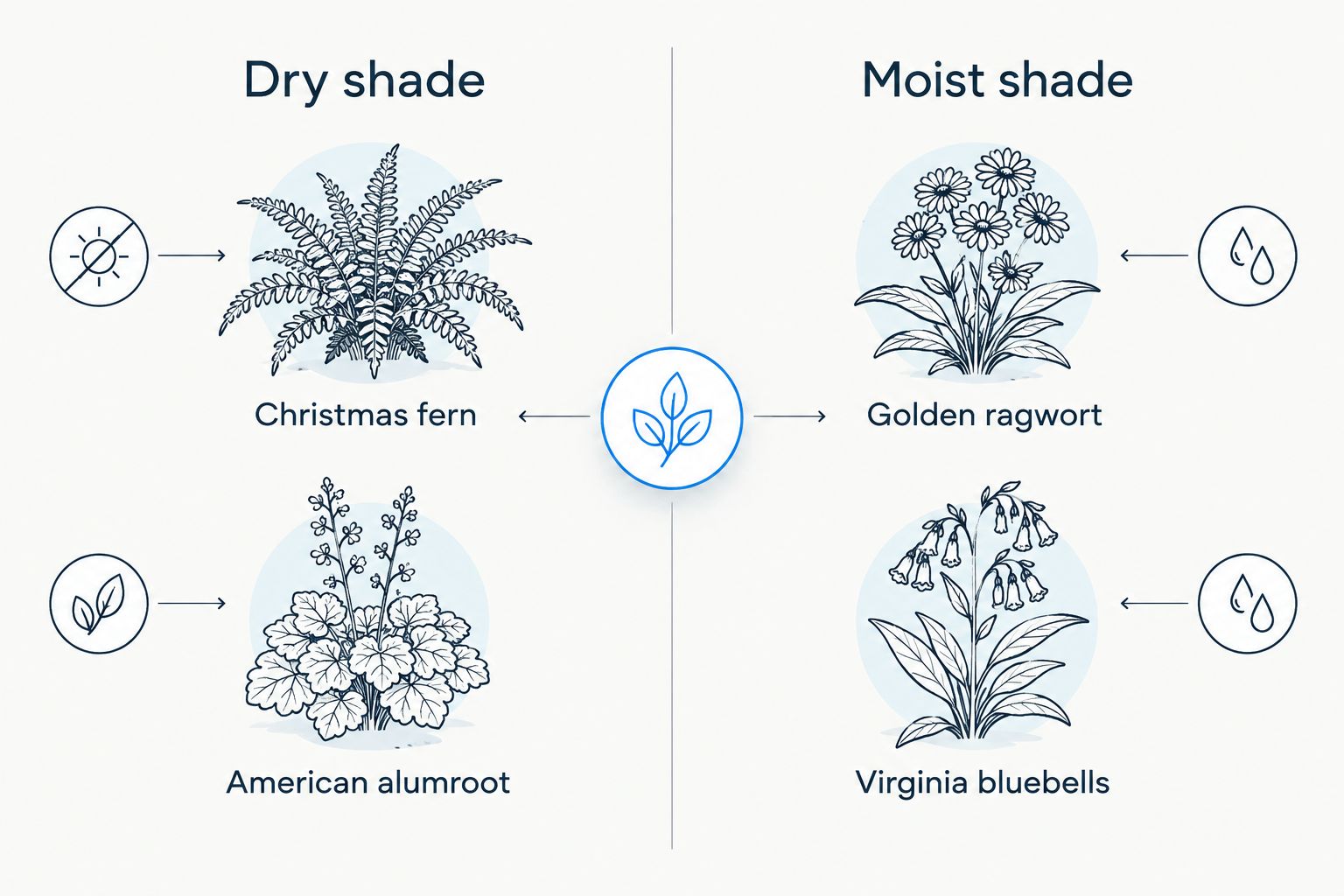
What makes the best shade perennial for Virginia?
These criteria drive the 2026 ranking. Use them before choosing a plant by flower color alone.
- Moisture fit: Separate reliably moist soil from dry ground under trees. Shade-tolerant does not mean drought-tolerant.
- Light fit: Note whether the site receives morning sun, filtered light, or almost no direct sun. Flowering can be lighter in deeper shade.
- Seasonal presence: Evergreen foliage, spring flowers, and summer-dormant growth serve different purposes.
- Spread: A spreading groundcover can fill bare soil, but it needs room; a clump-forming plant is easier to contain.
- Planting method: Plugs are young plants with roots already growing. Seeds need to germinate and establish; mature plants give you an immediate larger specimen.
- Maintenance: Check the plant's water needs during establishment and whether nearby tree roots leave enough workable soil.
Best shade perennials for Virginia at a glance
| Perennial | Best for | Standout feature | Key limitation |
|---|---|---|---|
| Christmas fern | Evergreen structure | Fronds remain through winter | Needs drainage; not a wet-site fern |
| Woodland phlox | Spring flowers | Blooms in partial shade | Flowers less in deep shade |
| Golden ragwort | Damp groundcover | Spreads by runners | Can move beyond a small planting area |
| American alumroot | Tidy foliage clumps | Distinctive basal leaves | Flowers are less conspicuous |
| Virginia bluebells | Moist spring display | Blue spring flowers | Foliage disappears in summer |
| Wild ginger | Low woodland cover | Broad leaves cover shaded soil | Slow to fill a large bed |
| Foamflower | Flowers in moist woodland soil | Airy spring bloom spikes | Struggles in prolonged dry soil |
| Blue wood aster | Later-season flowers | Blooms after many spring woodland plants | Can self-seed |
The table is a decision tree, not a claim that every species fits every Virginia yard. In 2026, choose a plant only after matching its row to the conditions in your bed.
1. Christmas fern: best shade perennial for evergreen structure
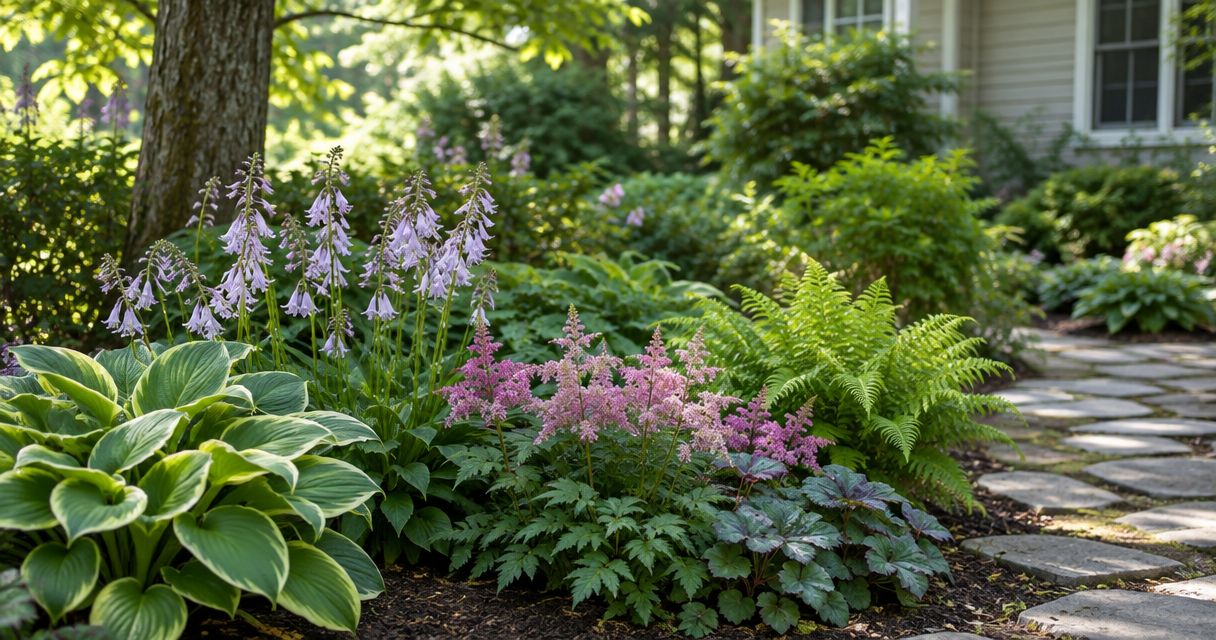
Christmas fern (Polystichum acrostichoides) is a native fern for partial to full shade and well-drained soil. Its fronds provide structure after many flowering perennials have died back. A mature clump commonly reaches about 1–2 feet tall, making it useful where you want visible foliage without a tall screen.
Christmas fern pros:
- Evergreen fronds keep a shaded bed from looking empty in winter.
- It suits a woodland planting beneath trees when the soil drains.
- A defined clump is easier to place than a running groundcover.
Christmas fern cons:
- Poor drainage and standing water are the wrong conditions.
- It does not supply the conspicuous flowers some gardeners want.
Best for: A shaded, well-drained bed where foliage matters across seasons. Verdict: Buy for that site; choose a moisture-loving species instead for soggy ground.
2. Woodland phlox: best shade perennial for spring flowers
Woodland phlox (Phlox divaricata) brings spring flowers to a site with partial shade and moist, well-drained soil. Give it a place where it can receive filtered light or some gentle sun rather than the darkest corner beneath dense evergreen cover. Its flowering season is the reason to choose it; other plants can carry the bed visually afterward.
Woodland phlox pros:
- Spring flowers add color before many summer perennials bloom.
- Its woodland habit fits mixed plantings with ferns and other natives.
- It gives gardeners a flowering choice without requiring full sun.
Woodland phlox cons:
- Blooming is weaker in deep shade.
- It needs attention during dry spells while its roots establish.
Best for: Spring color in a partly shaded bed that drains. Verdict: Buy when flowers are the priority and the site is not persistently dry.
3. Golden ragwort: best shade perennial for damp groundcover
Golden ragwort (Packera aurea) spreads into a leafy cover in partial shade, particularly where soil stays moist. Yellow flowers rise above the foliage in spring. Its ability to occupy ground is useful on a larger shaded patch but a drawback beside a narrow path or a small, carefully spaced collection.
Golden ragwort pros:
- Spreading growth helps cover bare soil.
- Spring flowers add a second reason to plant it.
- Moist partial shade suits its growth habit.
Golden ragwort cons:
- Runners can move into space reserved for neighboring plants.
- A dry patch beneath thirsty tree roots is a poor match.
Best for: A damp shaded area where spreading is welcome. Verdict: Buy for groundcover; skip it where you need each plant to remain in a tight clump.
4. American alumroot: best shade perennial for contained foliage
American alumroot (Heuchera americana) forms a foliage clump rather than a fast-moving carpet. It is a native option for partial shade and soil that drains, with small flowers held above its leaves. Choose it when you want to repeat discrete plants through a bed without asking one species to cover all the ground.
American alumroot pros:
- Clump-forming growth makes spacing easier to plan.
- Foliage gives the bed interest beyond its flowering period.
- It works alongside taller ferns and spring bloomers.
American alumroot cons:
- It will not close a broad gap as quickly as a spreading groundcover.
- Its flowers are subtle compared with its foliage.
Best for: A mixed shade border where you want individual foliage clumps. Verdict: Buy for structure; choose golden ragwort if the job is covering a broad, moist patch.
5. Virginia bluebells: best shade perennial for a moist spring display
Virginia bluebells (Mertensia virginica) flower in spring in moist woodland conditions. They are spring ephemerals: their foliage dies back after flowering, and the plants rest underground until the next growing season. That disappearance is normal, not evidence that you lost the plant.
Virginia bluebells pros:
- Spring flowers make a clear seasonal feature.
- Moist, shaded ground suits their woodland habit.
- Their summer dormancy leaves room for neighboring plants to take visual priority.
Virginia bluebells cons:
- They cannot provide summer-long foliage coverage.
- Dry, exposed soil does not match their preferred conditions.
Best for: A moist shade bed with other plants ready to fill the summer view. Verdict: Buy for spring flowers; skip them if one plant must keep the bed full all season.
6. Wild ginger: best shade perennial for low leaf cover
Wild ginger (Asarum canadense) is a native woodland plant with broad leaves that sit low over the ground. It suits partial to full shade with soil that retains some moisture. Its flowers sit close to the ground, so this is a foliage choice rather than a showy flowering feature.
Wild ginger pros:
- Broad leaves give low cover beneath taller plants.
- It handles the lower light of a woodland-style bed.
- Its growth habit suits small shaded spaces where a low layer is useful.
Wild ginger cons:
- It takes time to fill a large area.
- The flowers are easy to miss beneath the leaves.
Best for: A low foliage layer in moist woodland shade. Verdict: Buy for leaf cover; hold if you need a large bare patch covered immediately.
7. Foamflower: best shade perennial for delicate spring blooms
Foamflower (Tiarella cordifolia) grows in partial to full shade and favors moist, humus-rich soil. Its spring flower spikes rise above a lower layer of leaves. Place it where the soil does not dry hard beneath tree roots; shade alone will not meet its water needs.
Foamflower pros:
- Spring blooms add detail at the front of a shaded bed.
- Low foliage pairs with taller woodland perennials.
- It fits a moist planting alongside other shade natives.
Foamflower cons:
- Prolonged dry soil makes establishment difficult.
- The flowers are seasonal, not a summer-long display.
Best for: The front of a moist woodland border. Verdict: Buy when you can maintain even moisture during establishment; skip it for the driest tree-root zones.
8. Blue wood aster: best shade perennial for later flowers
Blue wood aster (Symphyotrichum cordifolium) flowers later in the growing season than the spring woodland plants above. It grows in partial shade and gives a mixed planting a flowering phase after bluebells and woodland phlox have finished. Allow space for its growth and watch for seedlings if you prefer fixed plant positions.
Blue wood aster pros:
- Later flowers extend interest beyond spring.
- It adds height and a looser shape to a layered bed.
- It is a native option for partial shade.
Blue wood aster cons:
- Self-seeding means you may need to remove unwanted seedlings.
- Flowering is less useful where light is extremely limited.
Best for: A mixed, partly shaded border that needs later-season flowers. Verdict: Buy if you have room to manage seedlings; hold for a small, tightly planned bed.
How these perennials were ranked
The ranking starts with fit to a common garden job, then weighs moisture needs, seasonal appearance, and spread. Christmas fern takes the default spot because evergreen structure answers a different problem from a brief spring bloom. The other choices win when your site and goal are more specific. This is not a ranking of current catalogue availability.
For a 2026 planting plan, pair spring ephemerals with plants that remain visible later. Put Virginia bluebells between clumps that will hold the space once their leaves fade. Use golden ragwort only where its spread helps rather than complicates the design.
Planting plugs in a Virginia shade bed
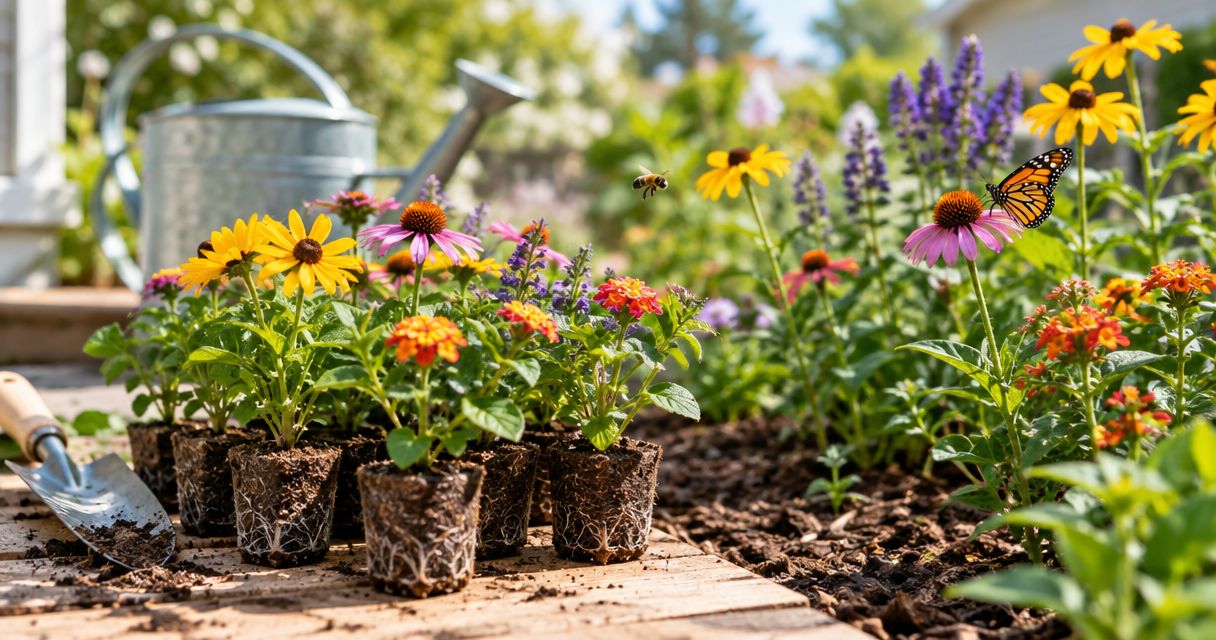
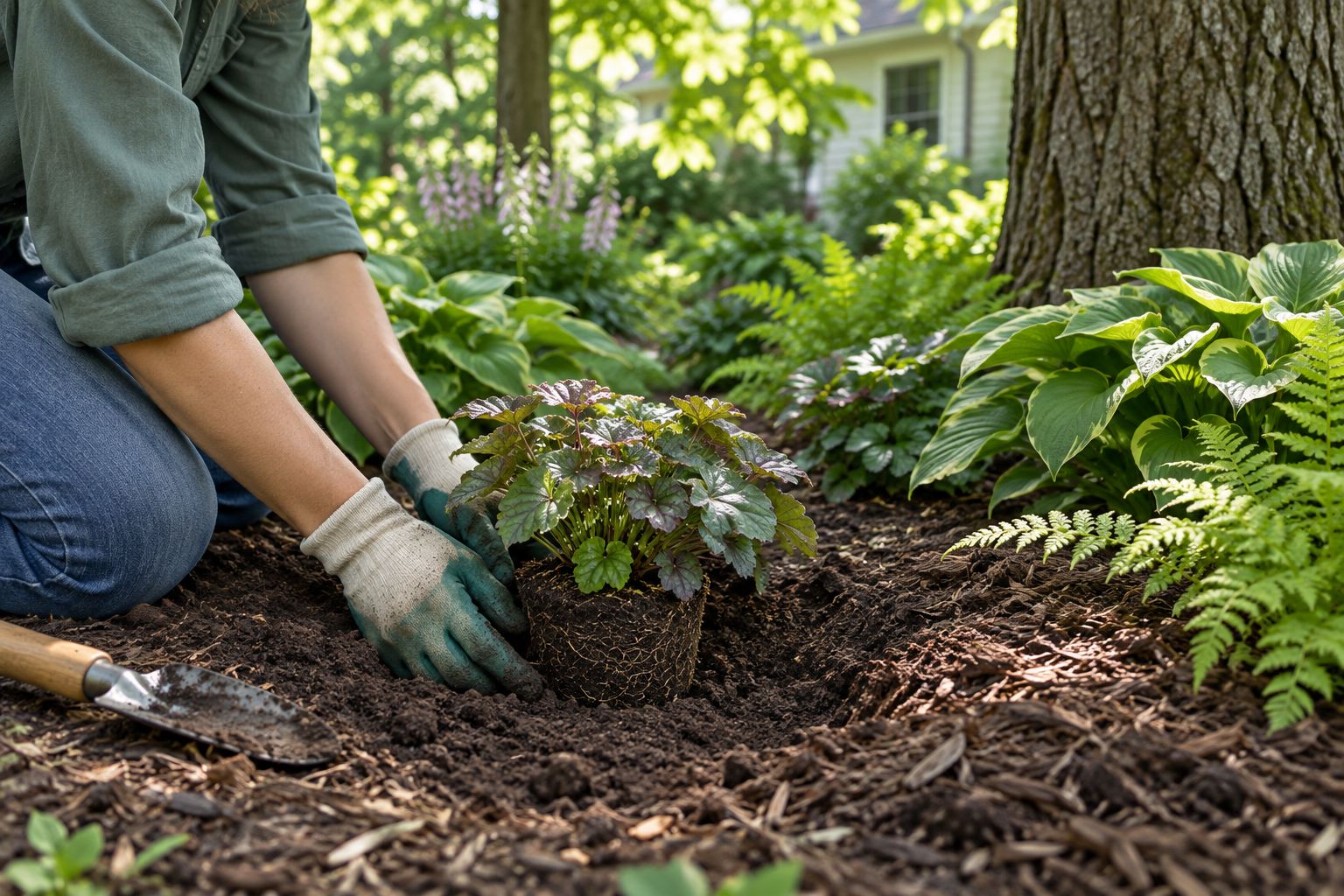
A plug is a young rooted plant, not a seed and not a mature garden specimen. It gives you a plant to set directly into prepared soil, but it still needs time to develop a larger root system. If you are filling a home garden rather than a large landscape area, decide how many planting spots you actually have before choosing a quantity.
- Prepare the site: Remove competing weeds and loosen a planting hole wide enough for the plug's roots. Keep the crown at the soil surface rather than burying it.
- Water at planting: Moisten the root ball and surrounding soil. Check moisture regularly while new roots move into the bed; tree roots can leave nearby soil dry even after rain.
- Mulch lightly: A layer around 2 inches deep helps limit surface drying. Keep mulch away from the crown so it does not sit against the stems.
- Watch the season: In Virginia, local frost dates and conditions vary. Protect tender new growth when frost is forecast rather than assuming every shaded site warms at the same time.
Meadows Garden Company offers flower plugs and perennials for Virginia gardeners, including statewide plug shipping and local delivery or pickup in Craig County. Check the current catalogue for species and quantities; this ranking identifies suitable plants, not confirmed inventory. In 2026, that distinction matters most when you are planning a bed around a particular bloom season.
Which shade perennial should you choose?
Choose Christmas fern by default for a well-drained shaded bed that needs year-round structure. Choose woodland phlox instead if spring flowers matter more and the site gets partial shade. For reliably moist ground you want to cover, choose golden ragwort and give it room; for a contained foliage clump, choose American alumroot.
Meadows Garden Company is a source of flower plugs and perennials for Virginia home gardeners; the best species for your shade garden is the one matched to your soil moisture. Do not treat a plant labeled for shade as interchangeable with every other shade plant.
FAQ
What are the best perennials for shade in Virginia?
Christmas fern is the best default for evergreen foliage in well-drained Virginia shade. Woodland phlox suits spring flowers in partial shade, while golden ragwort suits damp groundcover.
Which Virginia shade perennials are native?
Christmas fern, woodland phlox, golden ragwort, American alumroot, Virginia bluebells, wild ginger, foamflower, and blue wood aster are native options. Match each species to your soil moisture and available light.
What grows under trees in dry shade?
Christmas fern is a useful starting point where shaded soil drains and dries between rains. New plants still need watering while they establish because tree roots compete for moisture.
Will Virginia bluebells stay visible all summer?
No. Virginia bluebells are spring ephemerals, and their foliage dies back after flowering. Plant them among perennials that remain visible later in the season.
Is golden ragwort better than wild ginger for groundcover?
Golden ragwort is the stronger choice for spreading over a moist shaded area. Wild ginger gives low leaf cover but takes longer to fill a large bed.
Can I plant perennial plugs instead of seeds?
Yes. A plug is an already rooted young plant that you set into the garden, while a seed must germinate before it becomes a plant. Both need suitable light, soil, and moisture to establish.
Where can I check shade perennial availability for Virginia?
Check Meadows Garden Company's current catalogue for its listed plants and quantities. The species in this guide are planting recommendations, not a statement of current stock.
One last thing
If your shaded bed is bare every summer, do not solve it with Virginia bluebells alone: their disappearance after spring bloom is part of their growth cycle. In 2026, give that same space a lasting foliage layer, then let the bluebells supply the spring display.