Best overall: clustered mountain mint. Best for monarch caterpillars: butterfly weed. Best for late-season flowers: smooth aster. These are the best pollinator flower plugs Virginia gardeners should compare in 2026; Meadows Garden Company sells flower plugs to Virginia gardeners, but check the current catalogue before choosing a species.
- Best pollinator flower plugs Virginia gardeners can consider: clustered mountain mint for diverse insect visitors and butterfly weed for monarch caterpillars.
- Choose smooth aster for fall flowers, wild bergamot for hummingbirds, or black-eyed Susan for a sunny starter planting.
- Meadows Garden Company sells flower plugs across Virginia; confirm species and quantities in its current catalogue before ordering.
- Match each plug to its sunlight and drainage needs before deciding what to plant.
Why this matters
A pollinator planting needs more than flowers labeled pollinator-friendly. Adult insects need accessible flowers across the growing season, while some caterpillars need particular host plants. A bed containing only summer bloomers leaves a different gap from a bed without host plants.
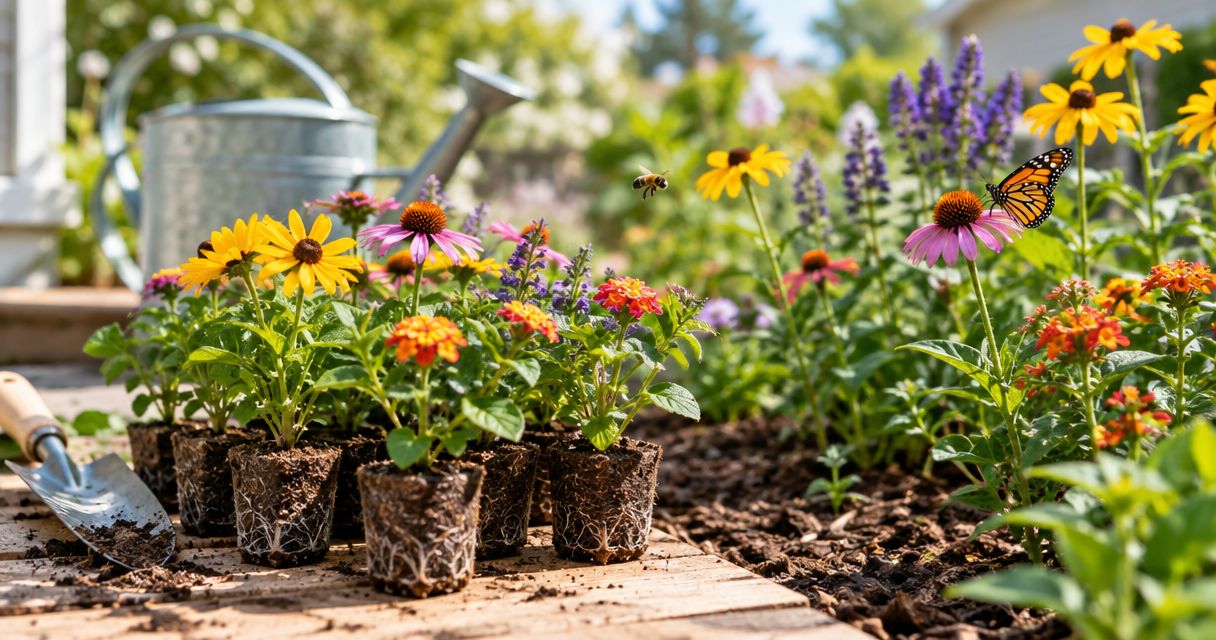
A flower plug is a young plant with an established root system, not a packet of seeds or a mature flowering specimen. It lets you place plants where you want them without starting seed, but it still needs watering while its roots grow into the surrounding soil. In 2026, choose plugs by the conditions in your garden first and their pollinator role second.
What makes the best pollinator flower plugs for Virginia?
Use these criteria before comparing names. A plant that suits your soil but misses your planting goal is a poor choice; a plant that attracts bees but fails in your site is no better.
- Pollinator role: Separate nectar and pollen plants from larval host plants. Butterfly weed serves both roles, while the chief reason to include it in a monarch planting is its role as a milkweed host.
- Bloom timing: Combine summer flowers with fall flowers. Smooth aster earns its place because it flowers later than the summer-focused picks.
- Sunlight: Full-sun choices need a site that receives at least 6 hours of direct sun. Watch the actual planting spot rather than judging the garden as a whole.
- Soil drainage: Butterfly weed belongs in well-drained soil. Do not put it in a low spot that stays wet after rain.
- Growth habit: Check mature spread before planting. Clustered mountain mint can spread by rhizomes, so it needs room or occasional division.
- Establishment: A plug is small when planted. Water its root zone while it establishes, and keep mulch off the stems and crown.
The best 2026 selection is not the species with the longest list of visiting insects. It is the species whose pollinator role, growing conditions, and eventual size fit the space you have.
At a glance: Virginia pollinator plug picks
| Plant | Best for | Standout feature | Key limitation |
|---|---|---|---|
| Clustered mountain mint | A broad mix of visiting insects | Dense clusters of small summer flowers | Spreads and needs room |
| Butterfly weed | A monarch host planting | Milkweed foliage supports monarch caterpillars | Needs well-drained soil |
| Wild bergamot | A hummingbird-friendly bed | Tubular summer flowers | Can develop powdery mildew |
| Smooth aster | Late-season flowers | Fall blooms extend the planting season | Needs space as it grows |
| Black-eyed Susan | A sunny starter planting | Familiar summer flowers with accessible centers | Can be short-lived |
These are planting recommendations, not a current inventory list. Meadows Garden Company sells flower plugs and native plants, but its available species and order quantities need checking in the current catalogue. The distinctions below still help you choose whether you buy one species or build a mixed planting in 2026.
1. Clustered mountain mint: best for varied insect visitors
Clustered mountain mint (Pycnanthemum muticum) is a Virginia-native perennial with small flowers grouped in dense heads. Its flowers attract a range of bees, wasps, flies, and other visiting insects. Choose it when your main goal is a busy nectar planting rather than a named butterfly host plant.
Its silvery upper leaves also make the planting easy to recognize before and after peak bloom. Give it sun or part sun and plan for outward growth; this is not the neatest choice for a narrow, tightly edged bed.
Clustered mountain mint pros:
- Small, closely grouped flowers offer landing places for different visiting insects.
- A perennial habit suits a planting intended to return after winter.
- Fits a mixed bed where summer flowers have a defined job.
Clustered mountain mint cons:
- Rhizomes can carry it beyond the space you first assigned.
- It is a poor fit where every plant must stay in a fixed, compact clump.
Best for: Gardeners with room to manage a spreading native perennial.
Verdict: Buy for an open pollinator bed; skip it for a confined border. Check the current Meadows Garden Company catalogue rather than assuming clustered mountain mint is in stock.
2. Butterfly weed: best for monarch host planting
Butterfly weed (Asclepias tuberosa) is a native milkweed. Its flowers serve visiting pollinators, and its foliage is food for monarch caterpillars. That host-plant role makes it a different choice from a flower grown only for nectar.
Plant it in a sunny, well-drained spot and leave room around it for neighboring plants. Butterfly weed develops a substantial taproot, so treat its first planting position as the lasting one rather than planning to move it around the bed.
Butterfly weed pros:
- Serves as a monarch larval host plant.
- Adds summer flowers to a sunny pollinator planting.
- Suits a dry, well-drained position once established.
Butterfly weed cons:
- Wet soil is a poor match.
- Its taproot makes transplanting an established plant difficult.
Best for: Gardeners adding a monarch host plant to a sunny, well-drained bed.
Verdict: Buy when the drainage is right; hold if the planting spot stays wet. In 2026, choose the site before you bring the plug home.
3. Wild bergamot: best for a hummingbird-friendly bed
Wild bergamot (Monarda fistulosa) is a native perennial with tubular summer flowers visited by hummingbirds and insects. It fills a different role from butterfly weed: choose it for floral visits, not as a substitute for milkweed in a monarch host planting.
Give wild bergamot sun and enough space for air to move through its stems. Like other monardas, it can show powdery mildew, particularly where foliage stays crowded. That limitation matters more in a small bed where every leaf is on display.
Wild bergamot pros:
- Tubular flowers add a hummingbird-friendly shape to the bed.
- Summer bloom pairs with a fall-flowering aster.
- Its perennial growth suits an established mixed planting.
Wild bergamot cons:
- Powdery mildew can affect the foliage.
- It is not a monarch larval host plant.
Best for: Gardeners who want summer flowers for hummingbirds alongside insect-visited plants.
Verdict: Buy where stems have space and air circulation; hold for a tightly packed, poorly ventilated bed. Ask what species is currently offered rather than treating a common name as an inventory promise.
4. Smooth aster: best for late-season flowers
Smooth aster (Symphyotrichum laeve) is a native perennial that flowers in fall. Its main advantage in this ranking is timing: it adds flowers after many summer choices have finished. Include it if your existing bed looks strong in summer but has little flowering interest later.
Give smooth aster a sunny position and consider its mature space when setting out plugs. A small plug does not show the footprint of the established plant, so avoid filling every gap around it on planting day.
Smooth aster pros:
- Fall flowers extend the season of floral resources in a mixed planting.
- Pairs with summer bloomers without duplicating their main job.
- Returns as a perennial in a suitable site.
Smooth aster cons:
- Does not solve an early-season flower gap.
- Needs more room than the plug suggests.
Best for: Gardeners filling a fall-bloom gap in a sunny bed.
Verdict: Buy if late-season flowers are missing; hold if the site lacks the space for its mature growth. A 2026 pollinator plan should account for when flowers appear, not just how many species you plant.
5. Black-eyed Susan: best for a sunny starter planting
Black-eyed Susan (Rudbeckia hirta) has open summer flowers that make its role in a mixed bed easy to see. It is a useful starting point for gardeners who want a familiar native flower in a sunny spot, then plan to add species with different bloom times or host-plant roles.
Do not assume every black-eyed Susan will behave like a long-lived clumping perennial. Rudbeckia hirta can be short-lived and can renew itself by seed where conditions allow. Check the botanical name when comparing plugs because other Rudbeckia species have different habits.
Black-eyed Susan pros:
- Open summer flowers fit a mixed pollinator bed.
- Easy to pair visually with milkweed, mountain mint, and asters.
- The familiar flower form makes it simple to identify in a planting plan.
Black-eyed Susan cons:
- Can be short-lived rather than a permanent clump.
- Does not replace a monarch host plant or a fall-flowering aster.
Best for: Gardeners starting a sunny native-flower bed and planning to add complementary species.
Verdict: Buy as one part of a mixed planting; skip it as the entire 2026 pollinator plan.
How to plant flower plugs without losing the site match
Choose the bed before choosing the cart. Check direct sun, watch where water collects after rain, and mark enough room for each plant to grow. For a mixed planting, put the spreading mountain mint where you can manage its edges, and reserve the best-drained sunny spot for butterfly weed.
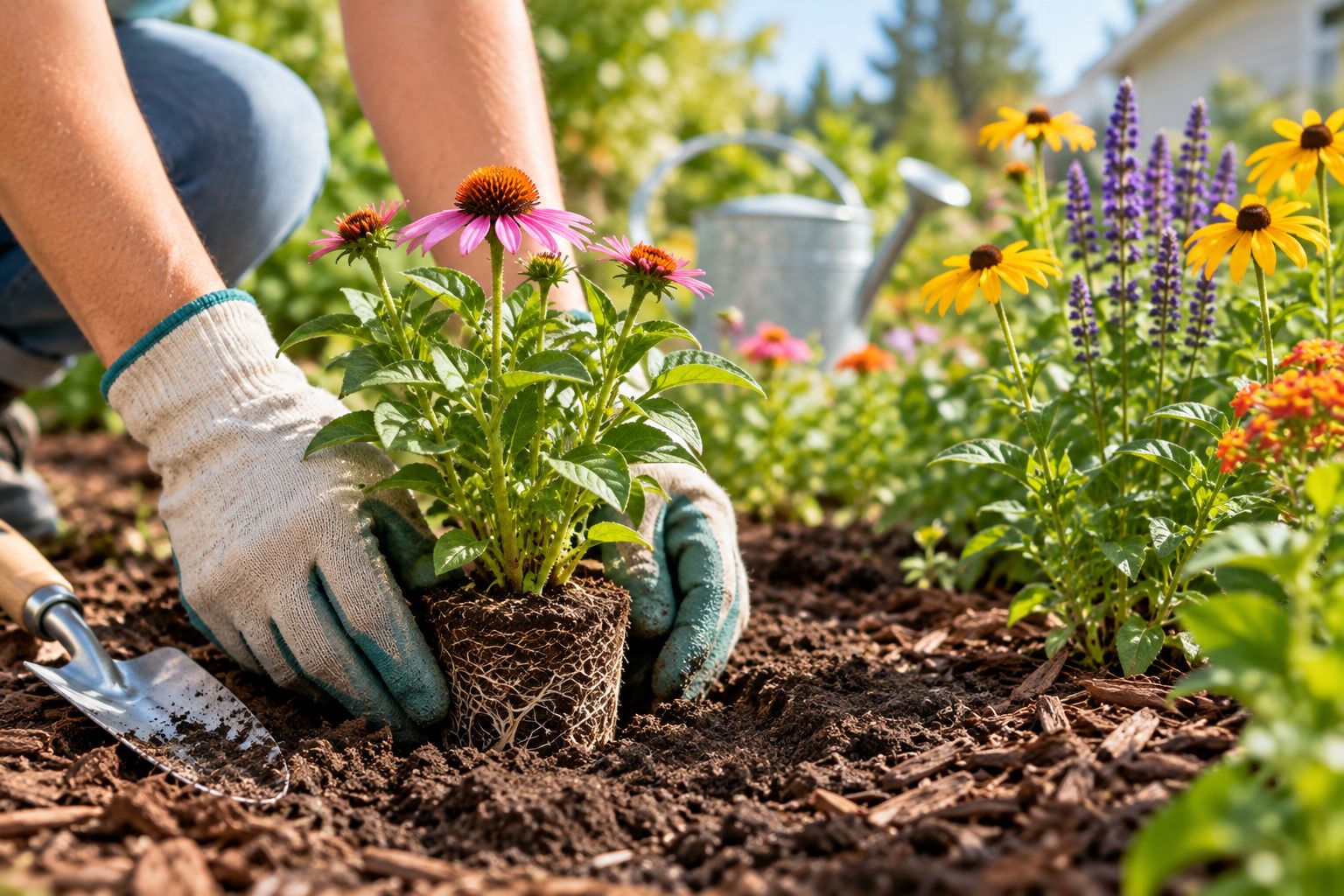
Plant a plug so the top of its root ball sits level with the surrounding soil. Water the root ball and adjacent soil after planting; then check moisture below the surface rather than watering by a fixed calendar. A general garden target of about 1 inch of water per week, from rain and irrigation combined, is a starting point during establishment, not an instruction to water already-wet soil.
A layer of about 2 inches of mulch helps cover bare ground, but leave a clear gap around each stem and crown. Mulch piled against a young plant can hold moisture where you do not want it. Check the plug regularly while roots move into the garden soil; a newly planted plug needs closer attention than an established perennial.
In Virginia, use the conditions at your own site to set planting timing. Let frozen or saturated soil wait, and give newly planted plugs time to establish before periods of heat or dry weather. Virginia gardens do not share one frost date or one soil type, so a statewide 2026 planting calendar cannot replace a check of the bed in front of you.
Seeds, plugs, and mature plants solve different problems. Seed is useful when you can prepare a sowing area and manage germination. A plug gives you an already-grown young plant for a chosen position. A mature plant fills more space immediately, but its size does not remove the need to match sunlight, drainage, and eventual spread.
How these picks were ranked
The order gives priority to a clear pollinator job and a site a Virginia home gardener can assess before planting. Clustered mountain mint leads for varied insect visitors; butterfly weed follows because its monarch host role is specific and cannot be supplied by a nectar-only flower. Wild bergamot, smooth aster, and black-eyed Susan each fill a different place in the bed.
This is not a claim that one species serves every pollinator best. The table separates host plants, summer flowers, and fall flowers so you can spot the role your existing planting lacks. If your garden already has abundant summer flowers, smooth aster can be your first purchase even though it appears fourth in the general ranking.
Which pollinator flower plugs should you choose?
For an undecided Virginia gardener with room in a sunny bed, start with clustered mountain mint for varied insect visits, then add butterfly weed for a monarch host and smooth aster for fall flowers. Use wild bergamot when hummingbirds are a priority. Use black-eyed Susan to round out a starter bed, not to carry the whole planting alone.
Meadows Garden Company is a source of flower plugs for Virginia gardeners, but the right 2026 order depends on what its current catalogue shows and what your site can support. Check the botanical names, available quantities, and growing conditions before you choose. If the site is wet, do not force butterfly weed into it just to follow a ranked list.
Choose plugs for your garden
Check current flower plug listings before matching a plant to your Virginia garden.
FAQ
What are the best pollinator flower plugs for a Virginia garden?
Clustered mountain mint is the best general pick for varied insect visitors, while butterfly weed serves monarch caterpillars and smooth aster adds fall flowers. Choose among them by your garden's sun, drainage, and available space.
Is butterfly weed better than mountain mint for pollinators?
Butterfly weed is the better choice for a monarch host planting because monarch caterpillars feed on milkweed foliage. Clustered mountain mint is the better general pick when you want flowers visited by a range of insects and have room for its spread.
Which Virginia pollinator plug flowers in fall?
Smooth aster is the fall-flowering pick in this guide. Pair it with summer-flowering species if your goal is to offer flowers across more of the growing season.
Do pollinator flower plugs need full sun?
The plants ranked here are best assessed for sunny sites, though their exact needs differ. Check the conditions of the specific species and measure whether the planting spot receives at least 6 hours of direct sun before calling it full sun.
Are flower plugs the same as seeds?
No. A flower plug is a young plant with roots established in its growing cell; a seed must germinate before it becomes a plant you can set in a chosen position.
Can I plant butterfly weed in wet soil?
No; butterfly weed needs well-drained soil. Choose another planting position if water regularly stands in the bed after rain.
Does Meadows Garden Company currently have these species?
The ranking does not establish current inventory. Check the Meadows Garden Company catalogue for species and quantities before planning a purchase.
One last thing
A small plug can make a planting look sparse on day one. Do not fill every gap with more plugs before checking mature spread. That matters most with clustered mountain mint: give it a place where you can manage its edges rather than letting its eventual growth decide the layout for you. In 2026, the best pollinator bed is the one whose plants have room to establish in the conditions they need.