Best overall for sunny mixed containers: petunia plugs. Best for shade: impatiens plugs. Best for hanging baskets: calibrachoa plugs. The best annual flower plugs for containers in a Virginia garden in 2026 depend first on light, then on pot size, drainage and watering.
- Petunia is the best annual flower plug for sunny mixed containers; give it room to spread.
- Choose impatiens for flowers in shade and calibrachoa for a sunny hanging basket.
- Meadows Garden Company sells flower plugs to Virginia gardeners; check current varieties before planning a pot.
- A plug is a young plant, not a seed or a finished container plant. Transplant it promptly and water it in.
Why this matters for Virginia containers
A container gives a small plant limited room for roots and less protection from drying out than garden soil. Put a shade annual in afternoon sun, or a sun-loving annual under a covered porch, and no amount of fertilizer fixes the light mismatch. Choose the site before the flower.
Meadows Garden Company is a flower-plug source for Virginia home gardeners, best for shoppers who match the current selection to their container's light. The company sells flower plugs online and ships plugs across Virginia. Check the Meadows Garden Company plant store for current varieties rather than assuming a plant in this guide is stocked.
A plug is a young plant grown in an individual cell. It has a head start over a seed, but it still needs transplanting and time to fill a pot. A mature container plant gives an immediate display; a plug lets you arrange young plants yourself. That distinction matters when you plan a 2026 porch display around a date: leave growing time after planting, and do not expect a newly transplanted plug to look finished.
What makes the best annual flower plug for a container?
Use these criteria before choosing a name from the table. They also explain why a plant that works in one Virginia yard can fail on the next porch.
- Light match: Track direct sun where the pot will actually sit. A sunny location receives at least 6 hours of direct sun; a roofed porch can be much darker than the garden beside it.
- Growth habit: Upright plants suit pots viewed from above or at eye level. Spreading and trailing plants soften a container's edge, but they need space away from their neighbors.
- Drainage: Every choice below needs a container with a drainage opening. Roots sitting in water cannot use a carefully chosen planting mix well.
- Watering fit: Hanging baskets and small pots dry faster than large containers. Choose a plant you can check regularly during Virginia's hot spells.
- Airflow and maintenance: Crowded stems stay damp longer after rain. Leave room to remove faded flowers or damaged foliage where the plant needs it.
- Plug condition: Look for healthy foliage and roots that hold the plug together without being tightly wound around the cell. Plant at the same soil depth it occupied in the tray.
A practical starting point for several plugs is a pot at least 12 inches wide. That is a planning size, not a fixed plant count: spacing changes with the variety's mature spread. Use the label for the actual plants you buy, and resist filling every gap on planting day.
Best annual flower plugs for containers at a glance
| Annual | Best for | Standout feature | Key limitation |
|---|---|---|---|
| Petunia | Sunny mixed patio pots | Spreading flowers | Needs sun and routine upkeep |
| Calibrachoa | Sunny hanging baskets | Trailing habit with small flowers | Basket soil dries quickly |
| Zinnia | Upright color in sunny pots | Upright stems | Needs room for airflow |
| Impatiens | Shady flowering pots | Flowers in low direct light | Poor choice for hot, exposed sun |
| Wax begonia | Pots with morning sun | Compact form | Not a trailing plant |
| Coleus | Foliage-focused shade pots | Colorful leaves | Flowers are not the main display |
The table separates plants by use rather than ranking every annual against the same job. In 2026, start with the row that matches your site; do not buy a sun plant because it sits higher on a list.
1. Petunia: best annual flower plug for sunny mixed containers
Petunia is the default when you want flowers to spread through a sunny patio pot. Its growth can soften the rim while upright companion plants occupy the center. Give it direct sun and space to expand instead of packing the container for an instant full look.
Choose petunia when you can inspect the pot often and water according to the soil, not a calendar. Flowering and growth habits differ among petunias, so check the variety's label before deciding how many plugs belong together. If your spot gets only a little morning light, pick a shade option instead.
Petunia pros:
- Flowers suit a pot viewed from the side as well as above.
- Spreading growth helps cover visible potting mix.
- Works as the flowering part of a mixed sunny planting.
Petunia cons:
- A shaded porch limits its usefulness.
- Crowded plants can cover smaller companions.
- Some varieties need more cleanup than others; follow the plant label.
Best for: A sunny mixed container where you want flowers to extend toward the edge. Verdict: Buy for a sunny site; skip for shade.
2. Calibrachoa: best annual flower plug for sunny hanging baskets
Calibrachoa makes sense when the container is raised and you want small flowers trailing below its rim. That is a different job from a petunia filling the surface of a mixed patio pot. A basket also puts the roots in a limited volume of mix, so check moisture by touch, especially during warm, windy weather.
Use a basket that drains freely. Water the potting mix thoroughly when it needs water, then allow excess to leave through the bottom. Do not assume an exposed basket and a sheltered ground-level pot need water on the same day.
Calibrachoa pros:
- Trailing stems suit the view from below.
- Small flowers provide detail close to a seating area.
- Its form can stand alone without an upright companion.
Calibrachoa cons:
- A hanging basket demands frequent moisture checks.
- It is a poor fit for deep shade.
- Trailing stems can hide a neighboring plant in a crowded basket.
Best for: A sunny hanging basket that you can reach easily to check and water. Verdict: Buy if regular basket care fits your routine; hold if it does not.
3. Zinnia: best annual flower plug for upright color in sunny pots
Zinnia is the upright choice for a sunny container where you want distinct stems rather than flowers spilling over the rim. Place the pot where air can move around the foliage. In Virginia's humid weather, that matters more than squeezing extra plants into a small container.
Check the mature height on the specific variety's label. Zinnias differ in size, and a tall plant in a light, narrow pot can be awkward to manage. Handle the root ball rather than pulling on the stem when you move a plug from its cell.
Zinnia pros:
- Upright growth makes the flowers visible above the pot.
- Works as a focal plant in a sunny container.
- Distinct stems leave room to inspect foliage.
Zinnia cons:
- Dense planting restricts airflow around the leaves.
- Its upright form does not trail over a basket.
- Variety height matters when choosing a stable container.
Best for: An open, sunny pot with room around the stems. Verdict: Buy for upright color; skip if you need a trailing edge.
4. Impatiens: best annual flower plug for shady flowering pots
Impatiens fills the gap left by the sunny picks: it produces a flowering display where direct sun is limited. It suits a sheltered porch or another shaded position better than an exposed, hot patio. Keep the potting mix evenly moist without leaving the container standing in water.
Check which impatiens you are buying. Different types have different light tolerances, and common impatiens can be affected by downy mildew. The plant label and healthy foliage matter more than the generic name on a shopping list. Give plants room for air to move through the container.
Impatiens pros:
- Provides flowers where petunia and zinnia are poor matches.
- Fits a shaded container near an entrance or seating area.
- Forms a softer display than an upright stem plant.
Impatiens cons:
- Exposed afternoon sun can stress shade-suited types.
- Common impatiens are vulnerable to downy mildew.
- Moist soil still needs drainage; wet roots are not the goal.
Best for: A shaded pot where flowers, rather than foliage, are the priority. Verdict: Buy after checking the type and its light needs; skip for an exposed sunny patio.
5. Wax begonia: best annual flower plug for morning-sun pots
Wax begonia suits a compact container planting that gets morning light and some relief from stronger afternoon sun. It gives you flowers and glossy foliage in a contained shape. Use it when a trailing annual would block a walkway or spill over a small table.
Morning sun is a useful starting point, not a substitute for reading the variety's label. Watch how the plant responds in its actual position after transplanting. If leaves show stress, adjust the pot's exposure; a movable container makes that easier than changing a garden bed.
Wax begonia pros:
- Compact growth suits a small display area.
- Flowers and foliage both contribute to the pot.
- Fits a container where trailing stems would be inconvenient.
Wax begonia cons:
- It will not spill over a basket like calibrachoa.
- Light tolerance varies by variety.
- A pot without drainage still puts its roots at risk.
Best for: A compact pot with morning sun or bright, sheltered light. Verdict: Buy when you need contained growth; hold until you check the label if the site gets strong afternoon sun.
6. Coleus: best annual plug for foliage-focused shade pots
Coleus is the choice when leaves can carry the display instead of flowers. Its foliage gives a shaded container a clear focal point even when nearby flowering plants are between blooms. Leaf colors and mature sizes vary, so choose the actual variety for the space available.
Coleus grows best when the light suits its variety and the potting mix does not dry out completely. Many gardeners remove flower spikes to keep attention on the foliage, but that is a design choice. If flowers are the point of your container, use impatiens instead.
Coleus pros:
- Foliage provides the main display without depending on bloom timing.
- Works as an upright feature among lower plants.
- Offers a clear alternative to flowering shade annuals.
Coleus cons:
- It does not answer a request for a flower-filled pot.
- Mature size varies, making label checks necessary.
- Dry container mix can stress the foliage.
Best for: A shaded container planned around leaf color. Verdict: Buy for foliage; skip if your main goal is flowers.
How these annuals were ranked
The 2026 ranking starts with light match, then separates plants by growth habit and the care their container requires. Petunia ranks first as a useful sunny mixed-pot choice, not as a plant for every Virginia porch. Impatiens takes the shade slot; calibrachoa takes the hanging-basket slot. No rank implies that Meadows Garden Company currently stocks a particular annual or variety.
Move plugs into containers without setting them back
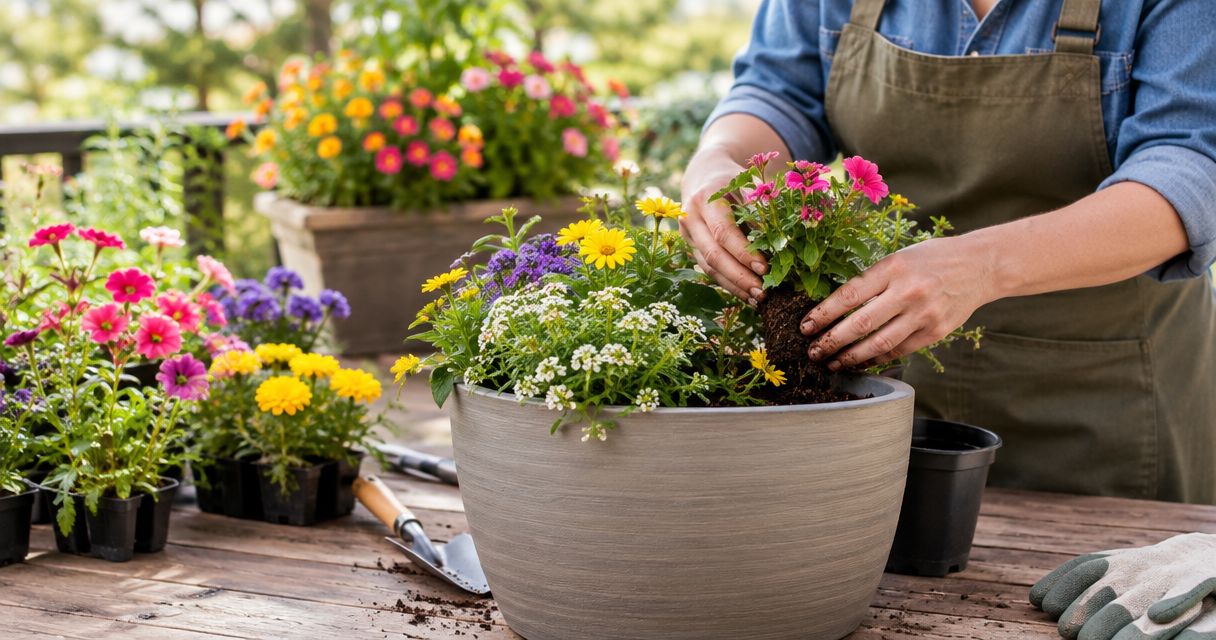
Fill a clean container with potting mix and leave about 1 inch below the rim so water does not immediately run over the side. Check for a drainage opening before adding plants. Gently remove each plug by supporting its root ball, set it at the depth it grew in its cell, and firm the mix around it without burying the stem.
Water after planting so the mix settles around the roots. Then check moisture in the root zone rather than watering by habit: a dry surface can hide damp mix below, while a newly planted plug may have roots in only a small part of the pot. Give plants space based on their eventual spread, even if the arrangement looks sparse at first.
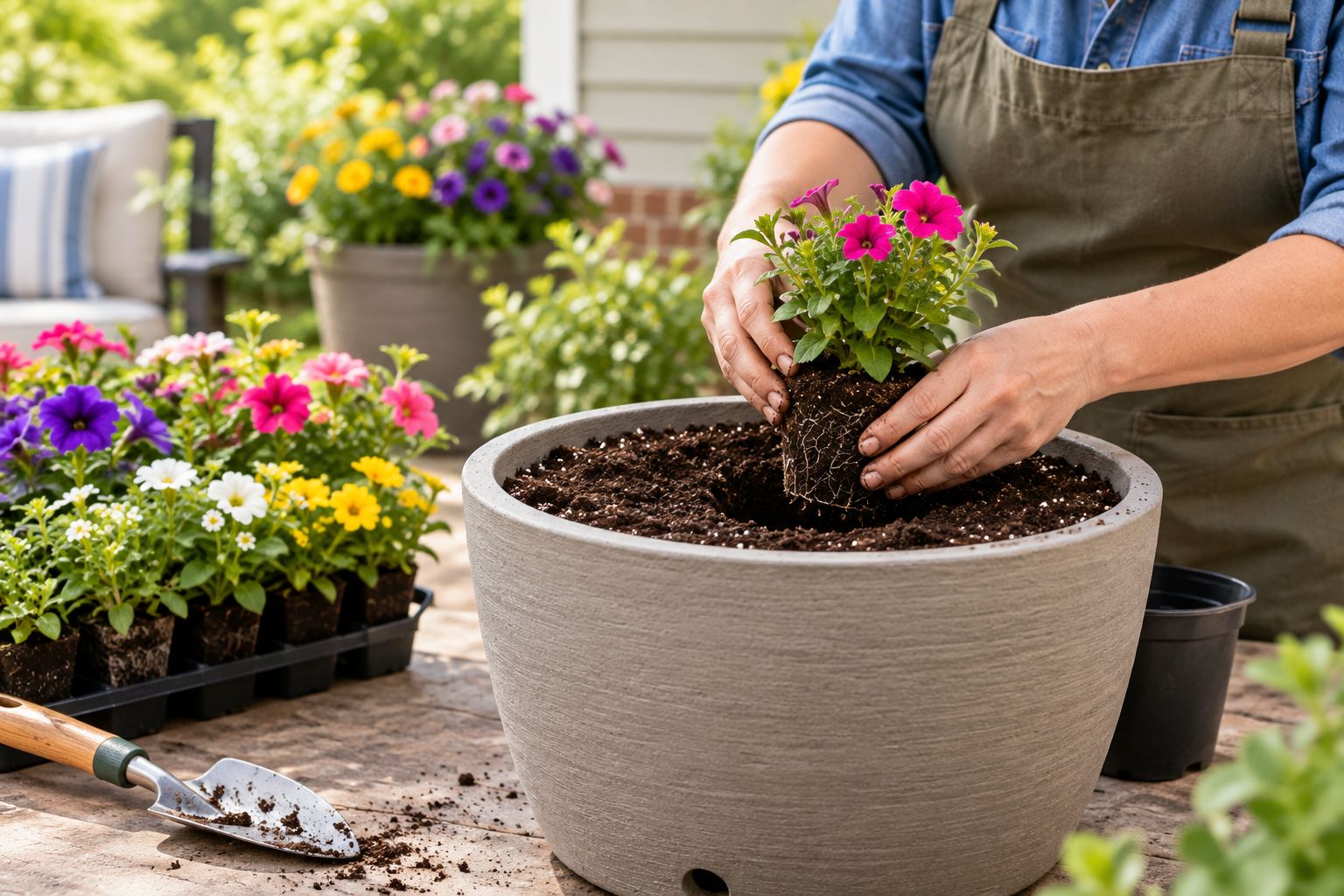
For a 2026 planting, check the forecast before moving tender annuals outdoors. A warm afternoon does not remove the risk of a cold night. If conditions are not suitable, keep the plugs protected and transplant when the weather and the plant's label support it.
Which annual flower plug should you choose?
Choose petunia if your container gets full sun and you want flowers spreading through a mixed pot. Choose calibrachoa instead if the pot hangs overhead and trailing stems are the point. For upright flowers in a sunny pot, choose zinnia and allow airflow around its leaves.
In shade, choose impatiens for flowers or coleus for foliage. Choose wax begonia for a compact pot with morning sun when you do not want a trailing plant. Before ordering any of them from Meadows Garden Company, compare the current catalogue with your site and the mature size on the plant label. That check turns a general 2026 recommendation into a usable planting plan.
FAQ
What are the best annual flower plugs for containers in full sun?
Petunia plugs are the best general choice for a sunny mixed container. Choose calibrachoa for a trailing hanging basket or zinnia for upright flowers, and check the variety's mature size.
Which annual flower plugs work in a shady Virginia container?
Impatiens is the flowering choice for a shady container, while coleus is a foliage-focused option. Check the specific plant label because light tolerance varies by type and variety.
Are flower plugs the same as seeds?
No. A flower plug is a young plant with an established root ball, while a seed must germinate before it becomes a plant you can transplant.
Are flower plugs ready to display when they arrive?
No. Plugs are young plants that need transplanting and growing time before they fill a container. A mature container plant provides a more immediate display.
Can I plant annual flower plugs outside before the last frost?
Protect tender annual plugs when frost threatens. Check your local forecast and the plant label before leaving a newly planted container outdoors.
How do I water newly planted flower plugs in pots?
Water after transplanting, then check moisture in the root zone and water when the mix needs it. Use a pot with drainage and do not leave its roots standing in water.
Does Meadows Garden Company stock these annual flower plugs?
The current catalogue determines which annual varieties Meadows Garden Company offers. Check it before planning around a particular plant; this guide is a planting comparison, not an inventory list.
One last thing
The pot's location is easier to change than the plant's light needs. Before you buy plugs for a 2026 container, set the empty pot where it will live and observe its sun for a day. That simple check can move your choice from petunia to impatiens before you have plants to protect.