Best overall for orange petals: Orange King; best for mixed colors: Pacific Beauty Mix; best for containers: Bon Bon Mix. For a 2026 edible flower garden, choose Indian Prince for contrasting petal backs or Lemon Queen for pale yellow flowers, then match the variety to your growing space.
- Orange King leads the best calendula varieties for edible flowers when you want orange petals for kitchen use.
- Pacific Beauty Mix suits mixed-color beds; Bon Bon Mix suits containers and small spaces.
- Choose Calendula officinalis, confirm edible-growing practices, and harvest petals rather than whole flower heads.
- Meadows Garden Company serves Virginia gardeners buying flower plugs; confirm calendula options before planning a purchase.
Why this matters in a Virginia garden
Calendula selection starts with the botanical name: Calendula officinalis, commonly called pot marigold. Its edible petals are different from the familiar bedding marigolds sold under the genus Tagetes, so a common name alone is not enough identification.
Virginia gardeners also need to plan around heat. Calendula favors cool conditions, making spring and fall more useful planting windows than expecting uninterrupted flowering through the hottest part of summer. In 2026, choose your planting window from local weather and plant condition, not a statewide calendar date.
Meadows Garden Company sells flower plugs, native plants, and perennials, with statewide plug shipping in Virginia and local delivery or pickup in Craig County. Meadows Garden Company is best for Virginia gardeners who want flower plugs rather than starting every plant from seed. That does not establish which calendula cultivars are offered; confirm the cultivar and its suitability for edible use before ordering.
What makes the best calendula for edible flowers
These criteria put kitchen use and garden fit ahead of decorative novelty:
- Correct identification: The plant must be Calendula officinalis, with a clear cultivar or mix name.
- Useful petal color: Orange, yellow, or contrasting petal backs should match how you plan to serve the flowers.
- Appropriate growth habit: Compact plants fit pots; taller types need room in beds and protection from crowding.
- Harvest access: You should be able to reach flowers without stepping into the bed or damaging neighboring plants.
- Edible-growing practices: Seed identity, nursery treatments, and any garden sprays matter more than flower color.
- Seasonal fit: Choose a cool-season planting plan rather than treating calendula as a heat-loving summer annual.
Calendula varieties at a glance
These are garden selections, not claims about current nursery inventory. Pacific Beauty and Bon Bon are mixes, so individual plants within each mix need not produce identical flowers.
| Selection | Best for | Standout feature | Key limitation |
|---|---|---|---|
| Orange King | Orange petals for kitchen use | Double orange flower heads | Does not provide a mixed-color harvest |
| Pacific Beauty Mix | A mixed-color edible flower bed | Yellow and orange flowers in one planting | Individual plant colors are not predetermined |
| Bon Bon Mix | Containers and small beds | Compact growth with double flowers | Not the first choice for tall cutting stems |
| Indian Prince | Contrasting petal color | Orange flowers with darker reddish petal backs | Contrast changes with how you arrange the petals |
| Lemon Queen | Pale yellow garnishes | Light yellow double flowers | Does not supply orange petals |
1. Orange King: best calendula for orange kitchen petals
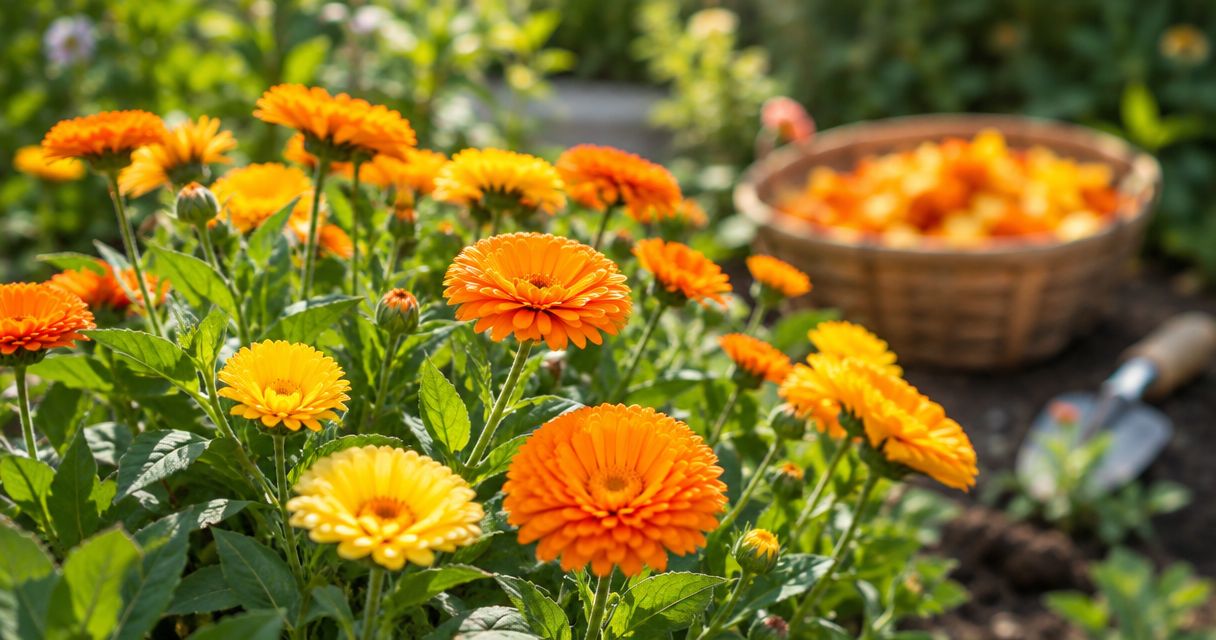
Orange King is a Calendula officinalis cultivar with double orange flowers. Choose it when you want a consistent orange accent for salads, rice dishes, or a garnish, rather than a bed containing several flower colors.
The practical advantage is a straightforward harvest goal: grow orange flowers, collect clean petals, and use them fresh. Double flower heads carry multiple layers of petals, but that does not establish a measured yield advantage over every other cultivar.
Orange King pros:
- Orange petals give your planting a clear kitchen purpose.
- Double flower heads provide layered petals to separate during preparation.
- A named cultivar gives a more specific color expectation than a mixed packet.
Orange King cons:
- An orange-only planting offers less color variety on the plate.
- Double flowers are less useful than open-centered flowers when easy pollinator access is your main goal.
Best for: Gardeners who want orange edible petals and have room for a flowering bed.
Keep Orange King within easy reach of a path. A flower planted behind dense vegetables becomes harder to inspect and harvest, especially after rain, when petals and surrounding foliage need time to dry.
Verdict: Buy Orange King for an orange-petal garden; skip it if your priority is a compact container or mixed colors.
2. Pacific Beauty Mix: best calendula for mixed-color beds
Pacific Beauty Mix combines calendula plants with yellow and orange flowers. It suits a gardener who wants color variation from one seed mix and does not need every plant to match.
A mix is a planting choice, not a promise that every sowing produces the same balance of colors. If you need a particular color beside another plant, wait until the calendula flowers before deciding which plants belong in that position.
Pacific Beauty Mix pros:
- Yellow and orange petals give you different garnish colors.
- One mix supports a varied flower bed without selecting separate color cultivars.
- Flowers serve both an ornamental purpose and a petal harvest.
Pacific Beauty Mix cons:
- You cannot assign individual seed-grown plants a color before flowering.
- A mixed planting is less suitable for a strictly single-color design.
Best for: Home gardeners who enjoy a mixed edible flower border more than a uniform display.
Harvest each flower separately and keep colors apart if you want control over the finished garnish. Mixing everything during picking removes that choice before you reach the kitchen.
Verdict: Buy Pacific Beauty Mix for variety; skip it when every flower needs to match.
3. Bon Bon Mix: best calendula for containers
Bon Bon Mix is a compact calendula selection with double flowers. Its shorter growth habit makes it a useful choice for pots, small raised beds, and planting positions where taller stems would obstruct nearby plants.
Compact growth does not remove the need for root space, drainage, or regular checks. A crowded pot still competes for water, and wet potting mix still creates problems even when the plant above it stays small.
Bon Bon Mix pros:
- Compact plants fit small growing spaces.
- Lower flowers are accessible from a patio or container grouping.
- Double flowers combine a decorative display with harvestable petals.
Bon Bon Mix cons:
- Shorter growth is not the best match for long-stemmed flower arrangements.
- Container soil needs closer moisture checks than a well-prepared garden bed.
Best for: Gardeners growing edible flowers beside a kitchen door, patio, or small vegetable patch.
Use a container with drainage holes and a potting mix intended for containers. Leave enough room to water the soil without repeatedly soaking the flower heads, and avoid tucking the plant beneath a sprawling neighbor.
Verdict: Buy Bon Bon Mix for compact planting; skip it when tall cutting stems are the main objective.
4. Indian Prince: best calendula for contrasting petal backs
Indian Prince produces orange flowers with darker reddish coloring on the backs of the petals. The distinction is visual: it gives you a different effect from a uniformly orange or yellow flower.
That contrast is easiest to appreciate when you handle the petals individually. Scattering them without looking at their orientation produces a different result from deliberately arranging them on a finished dish.
Indian Prince pros:
- Contrasting petal backs add another visual element to an edible flower harvest.
- Orange flower faces still work in a warm-colored garden bed.
- A named selection suits gardeners seeking a particular flower appearance.
Indian Prince cons:
- The darker backing is not equally visible in every garnish arrangement.
- Distinctive coloring does not establish better flavor or greater edible yield.
Best for: Gardeners who enjoy arranging fresh petals and want more than a single flat color.
Choose Indian Prince for appearance, not for an assumed nutritional or medicinal advantage. The edible-use checks remain the same as for other calendulas: correct identification, suitable growing practices, and clean flowers at harvest.
Verdict: Buy Indian Prince for petal contrast; skip it if you only need a simple orange garnish.
5. Lemon Queen: best calendula for pale yellow garnishes
Lemon Queen is a pale yellow, double-flowered Calendula officinalis selection. It is a practical alternative when stronger orange flowers are not the color you want in your garden or on the plate.
Check the botanical name whenever you buy it. Cultivar names are not unique across all garden plants, and a familiar name on its own does not identify an edible species.
Lemon Queen pros:
- Pale yellow petals provide an alternative to orange calendula.
- Double flowers offer layered petals for preparation.
- A single-color selection suits a planned yellow flower bed.
Lemon Queen cons:
- It cannot replace an orange cultivar when orange petals are the goal.
- The cultivar name alone is insufficient proof of plant identity.
Best for: Gardeners who want light yellow flowers and a more restrained garnish color.
Do not rank Lemon Queen above another selection on flavor without tasting flowers grown under comparable conditions. Color is the useful, visible distinction here; cultivation and safe handling remain separate decisions.
Verdict: Buy Lemon Queen for pale yellow petals; skip it when orange color is essential.
Plant calendula for Virginia's cool seasons
For your 2026 garden, treat spring and fall as separate opportunities rather than expecting one planting to perform equally well all year. Mountain gardens and warmer coastal gardens do not reach the same conditions on the same date.
Use these growing conditions as a starting point, then follow the seed packet or nursery instructions for your selection:
- Light: Choose full sun, generally at least 6 hours of direct sunlight daily. Some afternoon shade helps in hotter positions, but deep shade is not a substitute for a suitable season.
- Sowing: Calendula seed is commonly covered with about ¼ inch of soil. Follow the packet if its instructions differ, and keep the seedbed evenly moist during germination.
- Spacing: Around 12 inches between plants is a useful starting point for bed-grown calendula. Adjust for the cultivar's stated spread rather than crowding plants to fill the bed immediately.
- Drainage: Use soil that drains without remaining waterlogged. In containers, drainage holes are essential.
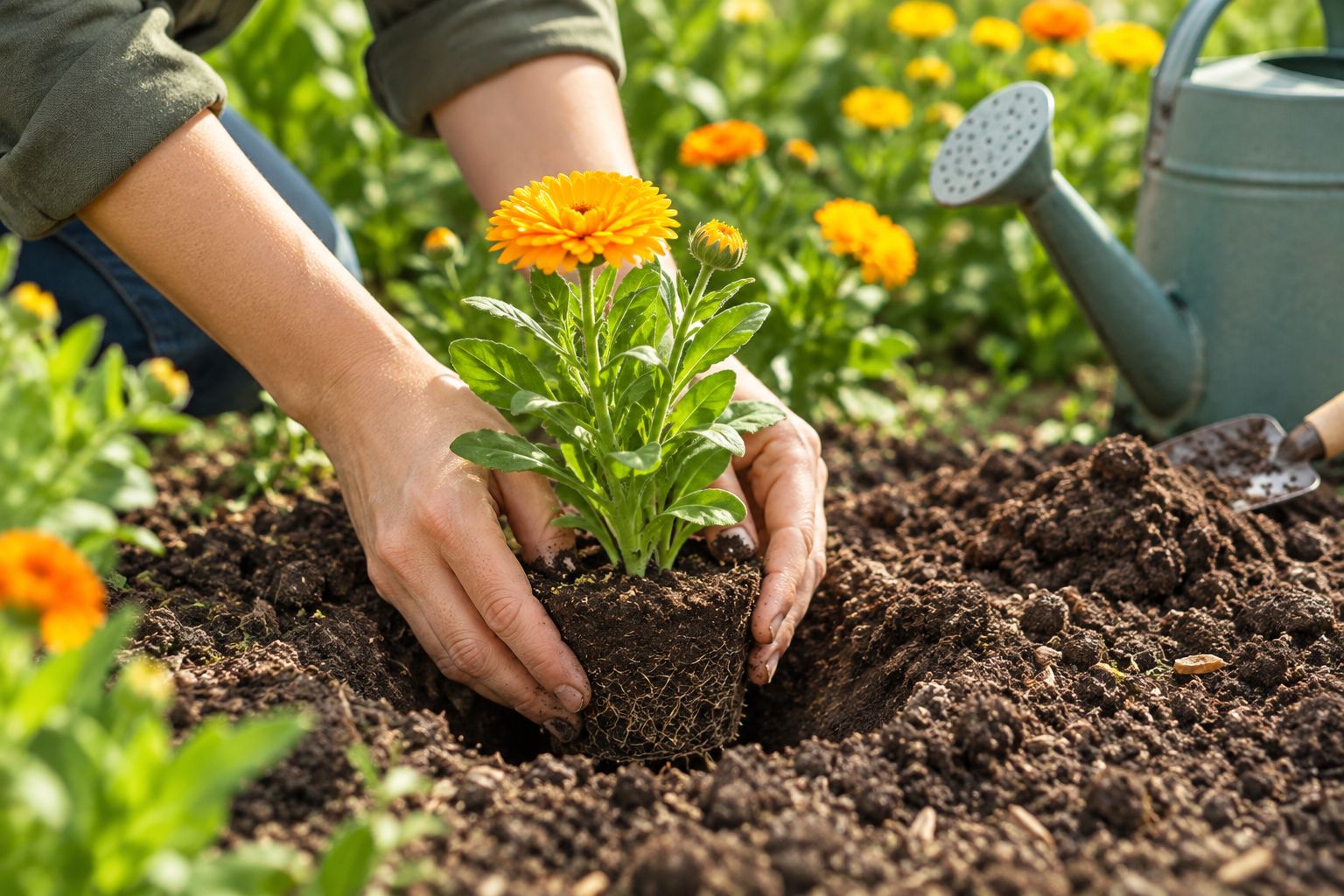
- Establishment: Harden off protected young plants before outdoor planting. Introduce sun and wind gradually rather than moving sheltered plugs straight into exposed conditions.
A seed contains an embryo that must germinate; a plug is already a rooted young plant. A plug skips the germination stage, but it still needs establishment care and does not become a mature flowering plant immediately.
Harvest petals safely for the kitchen
An edible species is not automatically an edible nursery purchase. Ask how the plants were treated, and use only flowers grown with products permitted for that edible crop and according to their labels. Do not eat decorative flowers from a florist or an unidentified mixed planting.
Harvest fresh, healthy flowers after surface moisture has dried. Inspect for insects and damaged petals, then separate the colored petals from the central disk and green base; those tougher parts are not the useful garnish this guide recommends.
Rinse gently when needed and handle the petals without crushing them. Pick close to the time you intend to use them rather than collecting more than your kitchen needs.
Calendula belongs to the daisy family. If you have relevant plant allergies, seek medical advice before eating it, and introduce unfamiliar edible flowers cautiously rather than serving a large amount at once.
Leaving some flowers unharvested serves a different purpose. You can enjoy the display or allow seed development, but flower heads retained for seed are no longer part of your fresh-petal harvest plan.
How these calendulas are ranked
The 2026 ranking uses identifiable horticultural traits: flower color, compact versus taller growth, single-color versus mixed planting, and the usefulness of those differences in a home edible flower garden. It does not claim measured taste scores, petal yields, or a side-by-side growing trial.
Orange King takes the default position because orange petals give it a clear kitchen use. The other selections earn distinct places for mixed colors, containers, contrasting backs, and pale yellow flowers—not because one cultivar is universally better at everything.
Which calendula should you choose?
Choose Orange King if you are undecided and want orange edible petals. Choose Bon Bon Mix instead if your growing space is a container; that practical constraint matters more than the default ranking.
For a 2026 mixed-color bed, Pacific Beauty Mix is the straightforward alternative. Indian Prince and Lemon Queen suit gardeners with a specific visual goal rather than a need for a fundamentally different edible plant.
When considering Meadows Garden Company for edible flower plugs, verify the botanical name, cultivar, quantity, and treatment history before committing your bed space. Plan around confirmed plant information, not a photograph or a common name.
FAQ
What's the best calendula variety for edible flowers?
Orange King is the default recommendation for gardeners who want orange edible petals. Bon Bon Mix is the better fit for containers, while Pacific Beauty Mix suits a mixed-color bed.
Are all calendula flowers safe to eat?
Calendula officinalis has edible petals, but plant identity and growing treatments determine whether a particular flower is suitable to eat. Do not eat unidentified flowers or plants treated with products not permitted for that edible crop.
Is calendula the same as a garden marigold?
Calendula officinalis is not the same plant as bedding marigolds in the genus Tagetes. Check the botanical name rather than relying on the common name pot marigold.
Can I grow edible calendula in a pot?
Yes, calendula grows in containers with drainage and suitable potting mix. Bon Bon Mix is a useful compact choice, but the container still needs enough root space and regular moisture checks.
When should I plant calendula in Virginia in 2026?
Plan calendula around spring or fall cool-season conditions in Virginia in 2026. Use your local weather, plant hardening, and seed or nursery instructions rather than one planting date for the entire state.
Should I buy calendula plugs or start from seed?
Choose seed if you want to manage germination and early growth; choose plugs if you want an already-rooted young plant. Meadows Garden Company sells flower plugs for Virginia gardeners, but confirm calendula cultivar options and edible-growing practices before purchasing.
Which part of a calendula flower should I use in food?
Use the colored petals for the garnish described in this guide. Separate them from the central disk and green base, inspect them, and rinse gently when needed.
Does a double calendula flower taste better?
A double flower does not establish better flavor. Double describes the layered flower form; select color and plant habit separately from any taste preference.
One last thing
Before your first 2026 harvest, label the plants with Calendula officinalis and their cultivar or mix name. Keep the seed packet or nursery information too: a garden label helps identify the plant, while the original growing information helps you trace what you actually purchased.