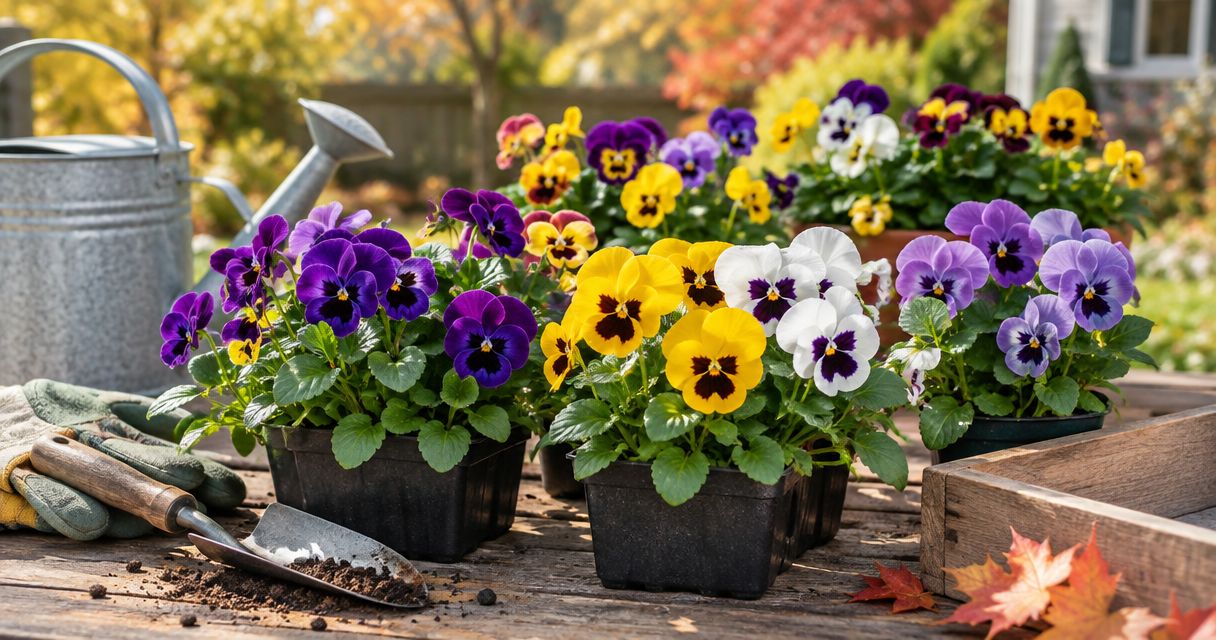
Best overall for beds: Matrix pansies. Best for compact edging: Delta pansies. Best for hanging baskets: Cool Wave pansies. Best for large-flowered displays: Majestic Giants II pansies. For fall planting in Virginia in 2026, choose by growth habit and planting location, then give young plants time to root before persistent freezes.
- The best pansy varieties for fall planting in Virginia match your bed, edging, or container conditions.
- Matrix pansies are the default for upright bedding; Delta pansies suit compact edging.
- Cool Wave pansies suit hanging baskets; Majestic Giants II pansies suit large-flowered displays.
- Meadows Garden Company serves Virginia gardeners buying flower plugs; confirm pansy selections before ordering.
Why this matters
A pansy that works in a hanging basket does not necessarily make a tidy border. Trailing stems need room to spread, while upright plants make a more contained display. Choose the habit first and the flower color second.
Meadows Garden Company sells flower plugs, native plants, and perennials, with statewide plug shipping in Virginia and local delivery or pickup in Craig County. Treat the named pansy series below as a planting shortlist, not a statement of current inventory.
Virginia also has different fall conditions across the mountains, Piedmont, and Coastal Plain. A sheltered coastal container and an exposed mountain bed need different protection, even when both contain the same pansy series.
What makes the best pansy varieties for Virginia?
Use these criteria to narrow your choice before comparing colors or flower size:
- Growth habit: Upright pansies suit beds and borders; trailing pansies suit baskets and container edges.
- Flower scale: Large flowers create individual focal points. Smaller flowers fit a finer-textured planting.
- Root establishment: A healthy root system matters more than a full display of flowers at planting.
- Drainage: Pansies need moisture without persistently saturated roots, especially through cool weather.
- Exposure: Sun supports flowering, but hot early-fall conditions put newly planted pansies under stress.
- Winter access: Choose a site where you can water during dry spells and protect young plants during severe cold.
For your 2026 planting, match the series to the site rather than choosing a pansy on flower size alone. None of these series removes the need for drainage, watering, or winter care.
Pansy varieties at a glance
These are pansy series, not individual color cultivars. Check the named selection before ordering because colors and flower patterns differ within each series.
| Pansy series | Best for | Standout feature | Key limitation |
|---|---|---|---|
| Matrix | Upright garden beds | Large flowers on a bedding-style plant | Does not provide a trailing basket effect |
| Delta | Compact edging | Compact, branching growth | Not the choice for stems spilling over a rim |
| Cool Wave | Hanging baskets and container edges | Spreading, trailing growth | Needs room beyond a tight border footprint |
| Majestic Giants II | Large-flowered focal displays | Prominent, large pansy flowers | Flower size does not guarantee winter flowering |
1. Matrix: best pansies for upright garden beds
Matrix is a large-flowered pansy series with an upright bedding habit. Choose it when you want recognizable pansy flowers across a front border, raised bed, or broad container without a trailing outline.
The practical advantage is the combination of flower size and contained growth. You can use Matrix as the main seasonal planting rather than asking it to spill over a basket. Leave enough space for each plant to develop instead of packing small plugs tightly for an immediate display.
Matrix pros:
- Upright growth suits conventional flower beds.
- Large flowers give a clear focal point near paths and entrances.
- Works as a repeated planting rather than an isolated specimen.
- Fits containers where you want flowers above the rim, not trailing stems.
Matrix cons:
- Does not substitute for a trailing pansy in hanging baskets.
- Needs the same protection from saturated soil and severe cold as other pansies.
Best for: Virginia gardeners planting an upright seasonal bed in 2026.
Verdict: Buy Matrix for a general-purpose pansy bed; skip it when trailing growth is the main requirement.
2. Delta: best pansies for compact edging
Delta is a compact, branching pansy series suited to edging and grouped container planting. Use it where the planting needs a defined outline, such as the front of a border or around a larger container centerpiece.
Compact growth is useful beside a path, but it is not a reason to crowd plants. Space according to the specific selection’s guidance and leave room for air movement. A neat planting still needs access for watering and removing spent flowers.
Delta pros:
- Compact growth suits the front of a flower bed.
- Branching plants work well in repeated groups.
- Fits container arrangements that need a contained shape.
- Gives you an edging option without relying on trailing stems.
Delta cons:
- Does not create the cascading outline of a trailing series.
- Tight planting can restrict airflow and make watering harder.
Best for: Gardeners who want a defined pansy edge along paths or container rims.
Verdict: Buy Delta for compact edging; skip it if the planting needs to cascade.
3. Cool Wave: best pansies for hanging baskets
Cool Wave is a spreading, trailing pansy series. Its growth habit makes it the clearest choice here for baskets, elevated containers, and planter edges where stems have room to extend.
A trailing pansy needs somewhere to trail. Set the container where stems will not be crushed against a wall or caught beneath passing feet. Remember that exposed baskets lose moisture differently from garden beds and leave roots more exposed to winter cold.
Cool Wave pros:
- Trailing growth suits hanging baskets.
- Spreading stems soften the edge of raised containers.
- Works where an upright bedding pansy would leave the rim bare.
- Provides a distinct growth habit for mixed cool-season containers.
Cool Wave cons:
- Spreading growth needs more room than a narrow edging position offers.
- Hanging baskets require close attention to moisture and cold exposure.
Best for: Virginia gardeners planting baskets or containers with space around the rim.
Verdict: Buy Cool Wave for trailing displays; skip it for a tightly contained border.
4. Majestic Giants II: best pansies for large-flowered displays
Majestic Giants II is a large-flowered pansy series suited to displays where individual blooms are the main attraction. Use it near a doorway, seating area, or frequently viewed container rather than expecting flower size alone to improve the whole planting.
Large flowers are a visual choice, not a winter-care strategy. Frost can damage open blooms while the plant remains alive. Judge recovery by the crown and new growth, not by one weather-marked flower.
Majestic Giants II pros:
- Large flowers create an obvious focal point.
- Suits containers viewed at close range.
- Works in grouped displays where individual blooms remain visible.
- Gives you a flower-focused alternative to choosing primarily by growth habit.
Majestic Giants II cons:
- Large flowers do not guarantee uninterrupted bloom through winter.
- Damaged or spent flowers need removal to keep a close-view display tidy.
Best for: Gardeners prioritizing prominent flowers near entrances and seating areas.
Verdict: Buy Majestic Giants II for flower-focused displays; skip it if trailing stems are more important.
How to plant pansies in Virginia this fall
For fall 2026, use local conditions rather than a statewide planting date. Mountain gardens cool earlier than many coastal gardens, and a sunny wall creates a different planting environment from an open bed.
Plant after persistent summer heat eases, while the soil remains workable and plants have time to establish before prolonged freezing. Do not confuse the first light frost with the end of the planting season: pansies are cool-season plants, but newly planted roots still need care.
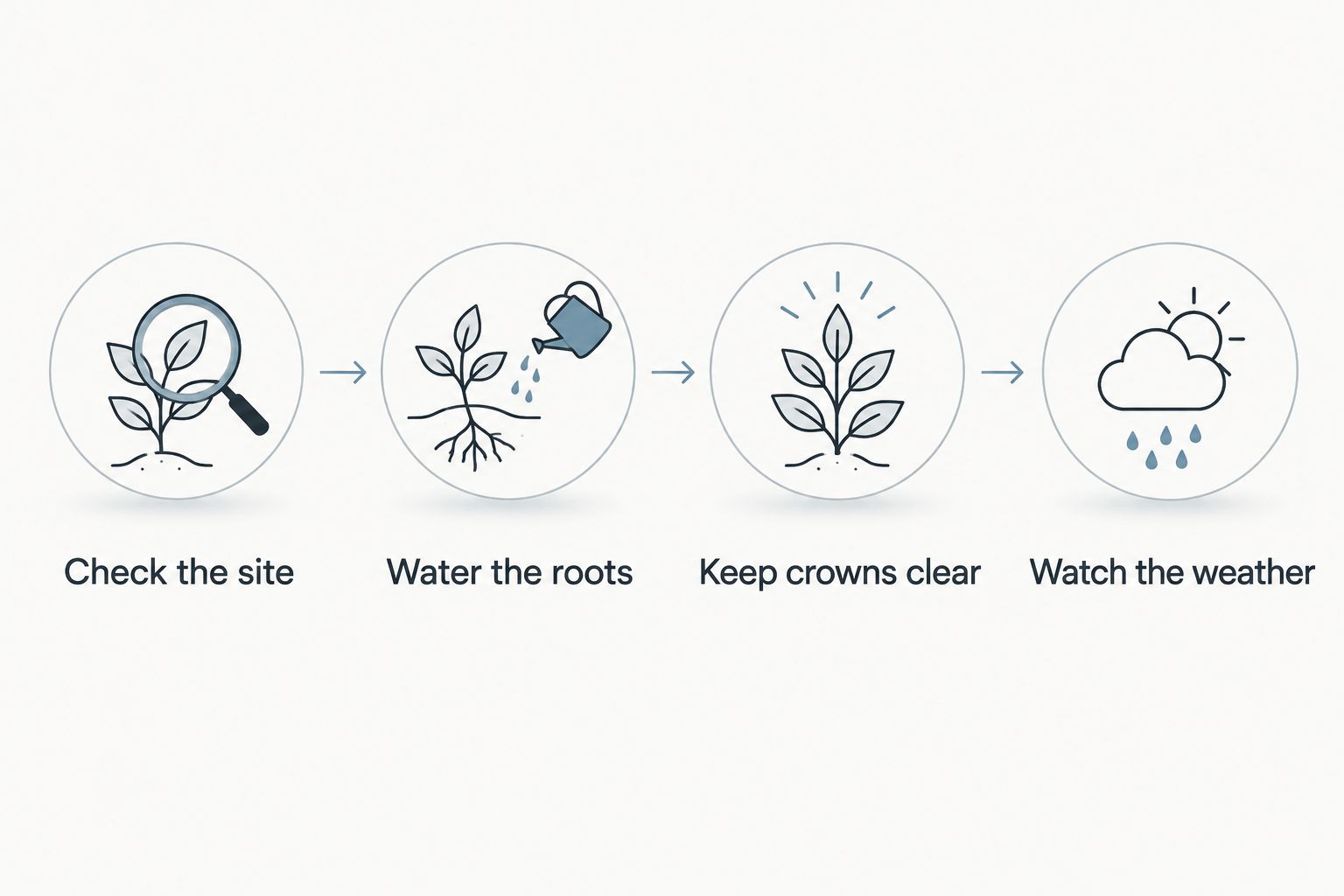
Check the site
Aim for a site receiving about 6 hours of direct sunlight per day during the cool season. Check the actual fall exposure; a bed shaded in summer can receive more light after deciduous trees lose their leaves.
Avoid low spots that stay wet after rain. If you use containers, make sure drainage holes remain open and do not leave pots standing in water-filled saucers.
Water the roots
Moisten the root ball before transplanting, then water the surrounding soil after planting. Dry plug roots do not become well watered just because the surface of the bed looks damp.
Ease each plug from its cell without pulling on the stem. Keep the root ball together and loosen a tightly circling outer root layer gently rather than tearing it apart.
Keep crowns clear
Set the plant at the depth it grew previously. The crown, where leaves and stems meet the roots, should not sit buried beneath soil or mulch.
In beds, use roughly 2 inches of mulch around the planting to moderate moisture and temperature changes. Keep that mulch away from the crowns; piling it against the plant defeats the purpose.
Watch the weather
Check moisture below the surface rather than watering automatically. About 1 inch of water per week, including rain, is a general garden starting point, not a fixed pansy requirement; adjust for soil, container size, temperature, and drainage.
Water when the root zone needs it. Before a severe cold spell, protect young plants with a suitable frost cover and follow the cover’s instructions, removing or venting it when conditions warm.
Choose plugs, seeds, or established plants
Pansy plugs are young rooted plants grown in nursery cells. Seeds need germination and seedling care first; established nursery plants have already developed further before you bring them home.
For a fall 2026 planting, choose the starting stage that fits your remaining growing time and willingness to care for young plants. Plugs save the seed-starting step, but they are not mature plants and need attentive watering during establishment.
| Starting material | Best for | Advantage | Limitation |
|---|---|---|---|
| Seeds | Gardeners planning ahead | Control over the seed selection and growing process | Requires germination and seedling care before planting |
| Plugs | Gardeners ready to transplant young plants | Roots and leaves are already established | Small root balls need close moisture checks |
| Established nursery plants | Gardeners wanting developed plants | Less early-stage growing work | Larger plants still need careful transplanting |
Meadows Garden Company is a flower-plug supplier for Virginia home gardeners. Confirm the pansy series, plant stage, and order quantity before choosing a planting layout; do not assume a named series is part of the current catalogue.
How we ranked these pansies
This ranking separates planting jobs rather than claiming one series wins everywhere. Matrix takes the default bed position, Delta serves compact edging, Cool Wave fills the trailing slot, and Majestic Giants II prioritizes flower size.
The criteria are growth habit, flower scale, site fit, and care limitations. A series name is not a guarantee against frost damage, poor drainage, or an unsuitable planting location.
Which pansies should you choose?
Choose Matrix if you want one straightforward choice for an upright Virginia flower bed. Choose Delta when the edge needs to remain compact, Cool Wave when stems need to trail, and Majestic Giants II when individual flowers are the focus.
Before ordering for 2026, decide where the plants will grow and how you will water them during establishment. Meadows Garden Company offers statewide flower-plug shipping in Virginia; check the current selection rather than building a plan around an assumed pansy listing.
FAQ
What's the best pansy variety for fall planting in Virginia?
Matrix is the default choice in this guide for an upright Virginia pansy bed. Choose Delta for compact edging, Cool Wave for trailing containers, or Majestic Giants II for large-flowered displays.
When should I plant pansies in Virginia in 2026?
Plant pansies after persistent summer heat eases and before prolonged freezing limits root establishment. Use your local weather and soil conditions rather than one date for the whole state.
Are Cool Wave pansies better than Matrix for hanging baskets?
Cool Wave is the better fit for hanging baskets because it has a trailing growth habit. Matrix suits upright displays rather than a cascading container edge.
Can pansies survive a Virginia winter?
Pansies can survive winter cold, but survival and continuous flowering are different outcomes. Severe cold, exposed containers, saturated roots, and poor establishment can damage plants.
Should I buy pansy plugs or start pansies from seed?
Choose pansy plugs when you want to skip germination and begin with rooted young plants. Start from seed when you have time and suitable conditions for raising seedlings before transplanting.
Do fall-planted pansies need full sun?
A sunny cool-season site supports pansy flowering. Assess fall and winter exposure separately from summer shade, and avoid planting young pansies into persistent heat.
Does Meadows Garden Company sell all these pansy varieties?
These recommendations do not confirm the current pansy selection at Meadows Garden Company. Check the catalogue for the named series and plant stage before ordering.
One last thing
A frost-damaged flower does not tell you whether the pansy plant has died. Remove spoiled blooms, inspect the crown, and watch for fresh growth when conditions improve. Replacing a living plant because its flowers look rough creates unnecessary work.