Best overall: Kong Red. Best for mixed-color foliage: Kong Mosaic. Best for pale contrast: Wizard Jade. The best coleus varieties for shade depend on whether your Virginia garden needs a broad-leaved focal point, a bright edge, or dark foliage beside lighter plants; this 2026 guide also compares Black Dragon and Wizard Golden.
- Kong Red leads the best coleus varieties for shade when you want a broad-leaved focal point.
- Choose Kong Mosaic for mixed colors, Wizard Jade for pale contrast, and Black Dragon for ruffled burgundy foliage.
- Wizard Golden adds lime-to-gold foliage; avoid treating any coleus as a solution for nearly lightless shade.
- Meadows Garden Company serves Virginia gardeners buying plant plugs, native plants, and perennials.
Why this matters in a Virginia shade garden
Shade under a porch is different from shade beneath a tree. Both reduce direct sunlight, but tree roots also compete for water, while a porch can block rain entirely. Choose coleus for the light you have, then decide how you will keep its roots evenly moist.
Coleus supplies foliage color rather than relying on flowers. It is frost-tender, so treat it as a seasonal planting in Virginia, not as a perennial that returns outdoors each spring. A sheltered wall does not make it winter-hardy.
Meadows Garden Company is best for Virginia gardeners seeking plant plugs, native plants, and perennials. Start with Meadows Garden Company when planning a plug purchase, and confirm the exact cultivar and plant format before ordering. A cultivar recommendation here is not a statement of current inventory.
What makes the best coleus varieties for shade
Use these criteria to choose your 2026 planting rather than buying by leaf color alone:
- Light fit: Favor bright shade or gentle morning sun with afternoon shade. Nearly lightless corners are poor growing sites.
- Visible contrast: Choose foliage that stands apart from the wall, mulch, or neighboring plants behind it.
- Leaf scale: Large leaves create a focal point; smaller leaves suit repeated planting and mixed containers.
- Growth habit: Match an upright coleus to a central or background position rather than expecting it to trail.
- Root conditions: Provide drainage and consistent moisture. Shade does not protect a plant from drought or waterlogged soil.
- Maintenance: Allow for pinching, watering, and removing flower spikes when foliage is your priority.
Best shade coleus at a glance
These are named selections to look for, not confirmed catalogue listings. The ranking separates their uses so you can choose the foliage effect your garden actually needs.
| Rank and selection | Best for | Standout feature | Key limitation |
|---|---|---|---|
| 1. Kong Red | A broad-leaved focal point | Red and burgundy coloring framed by green | Large leaves need space and protection from harsh exposure |
| 2. Kong Mosaic | Mixed-color foliage | Irregular green, cream, pink, and red patterning | Busy foliage can compete with other patterned plants |
| 3. Wizard Jade | Pale contrast | Creamy centers with green margins | Pale foliage needs protection from harsh afternoon sun |
| 4. Black Dragon | Dark, textured accents | Deep burgundy foliage with ruffled edges | Dark leaves disappear against dark backgrounds |
| 5. Wizard Golden | A lime-to-gold edge | Bright foliage without a multicolor pattern | Color alone will not rescue a deeply shaded site |
1. Kong Red: best shade coleus for a focal point
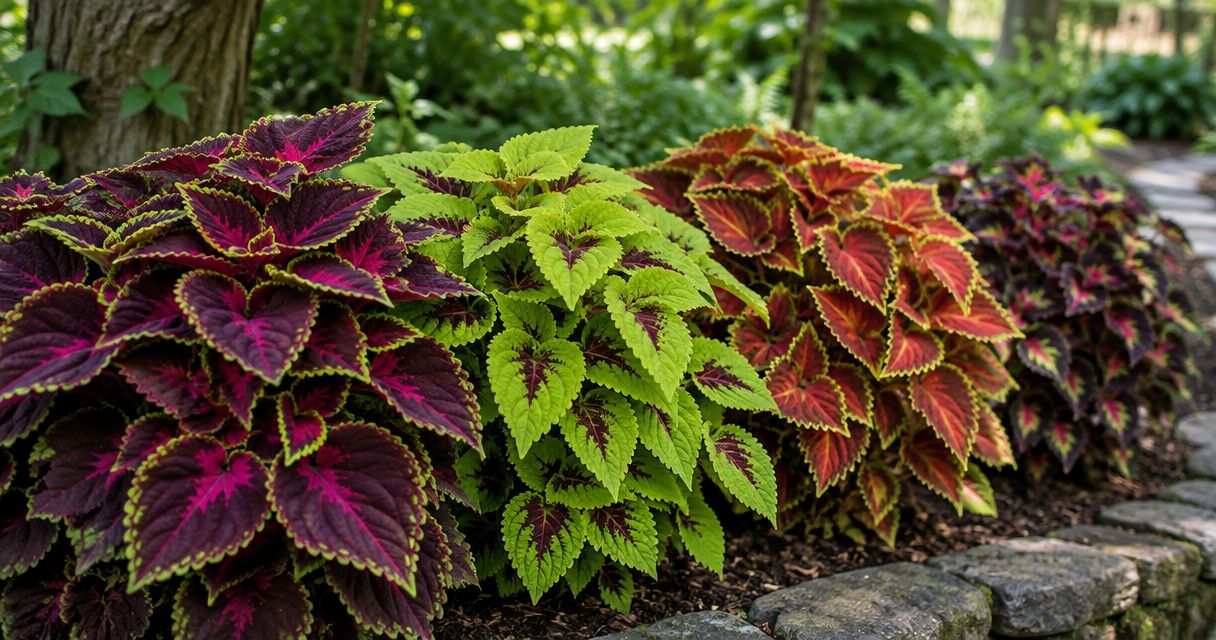
Kong Red combines large leaves with red and burgundy coloring inside a green margin. That broad foliage makes it a clear choice for a prominent container or a visible pocket near a shaded entrance. Give the leaves room rather than squeezing the plant between vigorous neighbors.
For a 2026 Virginia planting, choose bright shade or a site with gentle morning sun and afternoon protection. Watch the actual exposure: a container beneath an overhang can still receive a harsh strip of afternoon sunlight.
Kong Red pros:
- Large leaves create a distinct focal point.
- Red and green provide contrast within each leaf.
- The foliage works without waiting for a flowering display.
Kong Red cons:
- Broad leaves can overwhelm a small mixed container.
- Exposed conditions can damage the foliage; shade does not eliminate the need for shelter.
Best for: A shaded entry container or a bed that needs one clearly visible foliage accent.
Verdict: Buy Kong Red for a focal point; skip it where space is tight.
2. Kong Mosaic: best shade coleus for mixed-color foliage
Kong Mosaic carries irregular patches of green, cream, pink, and red. Its appeal is the changing pattern across the foliage, not a uniform block of color. Use it where you can see the leaves closely, such as a porch container or a bed beside a path.
Keep its companions visually simple. Plain green foliage or a restrained flower color lets the mosaic pattern remain readable instead of turning the planting into competing patches.
Kong Mosaic pros:
- Multiple colors provide interest within a single plant.
- Large leaves make the pattern easy to see nearby.
- It suits a foliage-led container without requiring several patterned varieties.
Kong Mosaic cons:
- Leaf patterns vary, so do not expect identical markings throughout the plant.
- Other strongly variegated companions can make the combination look crowded.
Best for: A close-view container where mixed foliage color is the main feature.
Verdict: Buy Kong Mosaic when you want pattern; skip it in an already busy planting.
3. Wizard Jade: best shade coleus for pale contrast
Wizard Jade has creamy leaf centers surrounded by green margins. That pale center creates contrast beside darker foliage without adding another red or purple plant. It is a useful choice where the garden already contains plenty of green but needs a lighter note.
Place Wizard Jade where its leaf pattern remains visible against the background. A pale wall can reduce that contrast, while darker foliage behind it makes the creamy centers easier to distinguish.
Wizard Jade pros:
- Cream and green provide a restrained foliage combination.
- Pale centers contrast with burgundy coleus.
- It offers an alternative to red-dominated shade planting.
Wizard Jade cons:
- Harsh afternoon exposure can damage pale foliage.
- Its pale centers stand out less against a light-colored background.
Best for: Lightening a green planting or contrasting with dark-leaved companions.
Verdict: Buy Wizard Jade for pale contrast, not for an exposed afternoon-sun position.
4. Black Dragon: best shade coleus for dark texture
Black Dragon has deeply colored burgundy foliage with ruffled edges. Choose it for the combination of dark color and leaf texture rather than expecting bright multicolor markings. The name does not mean every leaf appears uniformly black.
Place Black Dragon beside lighter foliage or a light container so its outline remains visible. In a dim corner backed by dark mulch, its strongest feature can become difficult to see.
Black Dragon pros:
- Ruffled edges add texture to a foliage combination.
- Burgundy leaves contrast with lime or creamy foliage.
- It supplies a dark accent without a complicated color pattern.
Black Dragon cons:
- Dark foliage loses definition against dark surroundings.
- It is a poor choice when your main goal is brightening a dim corner.
Best for: A textured burgundy accent beside pale or lime-colored plants.
Verdict: Buy Black Dragon for deliberate contrast; skip it against a dark background.
5. Wizard Golden: best shade coleus for a bright edge
Wizard Golden provides lime-to-gold foliage rather than a complicated red-and-green pattern. Use it where you want a lighter band of foliage along a container edge or at the front of a planting. Leaf color changes with growing conditions, so do not plan around an exact shade from a photograph.
Keep Wizard Golden where it receives enough light to grow well. Bright foliage is a design feature, not evidence that a plant will thrive in a nearly lightless corner.
Wizard Golden pros:
- Simple foliage color is easy to combine with patterned coleus.
- Lime-to-gold leaves contrast with burgundy selections.
- Repeating the same selection can give a mixed planting a clear edge.
Wizard Golden cons:
- Foliage color is not identical under every growing condition.
- It still needs suitable light, drainage, and regular watering.
Best for: A bright foliage edge beside darker plants.
Verdict: Buy Wizard Golden for a lighter edge; skip it as a fix for inadequate light.
How these coleus varieties are ranked
This 2026 ranking prioritizes shade placement, visible foliage contrast, leaf scale, and a distinct garden use. Kong Red takes the default position because its broad foliage gives a shaded container or bed a clear focal point. The other selections solve different design problems rather than offering interchangeable versions of the same effect.
The comparison is a planting guide, not a claim of side-by-side testing. Plant health, exposure, and root conditions still determine how any selection performs in your garden.
How to establish coleus plugs in Virginia
A plug is a young rooted plant grown in a small cell. It has already passed the germination stage, but it is not a mature container plant. Give a coleus plug time to establish roots before expecting it to fill a display.
Check light before planting
Observe the site in the morning and afternoon. In standard gardening usage, full sun means at least 6 hours of direct sunlight daily; a location that looks shaded at breakfast can still receive substantial afternoon sun.
For these shade-focused selections, prioritize bright shade and protection from harsh afternoon exposure. Under trees, check soil moisture rather than assuming cooler air means moist roots.
Harden off young plants
Introduce greenhouse-grown plants to outdoor conditions gradually over 7–10 days. Begin in a sheltered, shaded position and increase exposure without letting the small root balls dry out. Bring plants under protection when cold weather threatens.
For 2026 planting, follow your local forecast rather than a statewide calendar date. Craig County mountain gardens and warmer Virginia locations do not share the same last-frost timing.
Plant after frost risk
Freezing occurs at 32°F, and coleus is frost-tender. Wait until frost risk has passed and conditions are reliably warm; simply staying just above freezing is not a good establishment plan.
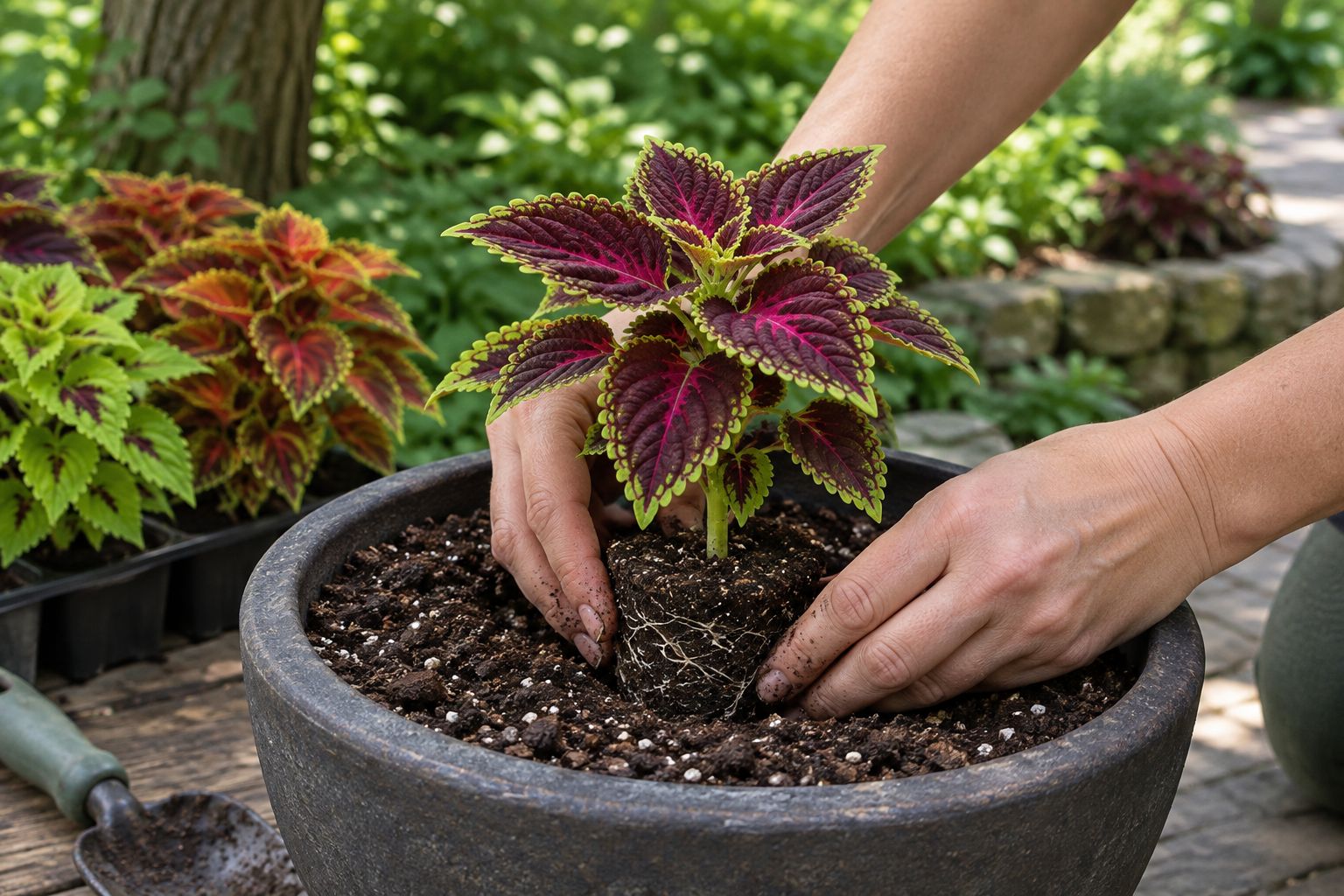
Plant at the same depth the coleus occupied in its cell. Gently loosen roots that circle tightly, keep the stem above the soil surface, and water the root ball thoroughly after planting.
Water and pinch
Use a container with drainage holes and check the potting mix before watering. Keep the root zone evenly moist without leaving it saturated; a shaded pot beneath a roof still depends on you for water.
Pinch growing tips to encourage branching once the plant is established. Remove flower spikes if your priority is foliage, and avoid removing so much growth that a small plug has little leaf area left.
Which shade coleus should you choose?
Choose Kong Red if you want one dependable design decision: a broad-leaved focal point in bright shade. Choose Kong Mosaic instead when the leaf pattern is the attraction, or Wizard Jade when the planting needs pale contrast.
Black Dragon belongs beside something lighter. Wizard Golden belongs where a lime-to-gold edge helps organize the planting. You do not need all five selections to make a good container; one clear foliage contrast is easier to maintain than a collection crowded into insufficient space.
Before buying coleus plugs for your 2026 garden, confirm the cultivar name, quantity offered, and plant format. Meadows Garden Company sells plant plugs, native plants, and perennials, with statewide plug shipping for Virginia gardeners and local delivery or pickup in Craig County; confirm the current catalogue for the plants you want.
FAQ
What's the best coleus variety for shade?
Kong Red is the best default here for a broad-leaved focal point in bright shade. Choose Wizard Jade for pale contrast or Kong Mosaic for mixed-color foliage instead.
Can coleus grow in full shade?
Coleus can grow without direct sun when the site still receives sufficient bright indirect light. Nearly lightless shade is unsuitable, so assess the site's brightness rather than relying only on the absence of sunlight.
Is Kong Red better than Kong Mosaic?
Kong Red is better for a clear red-and-green focal point; Kong Mosaic is better for irregular multicolor foliage. Both have large leaves, so leave room for their foliage rather than crowding them.
When should I plant coleus outside in Virginia in 2026?
Plant coleus after local frost risk has passed and conditions are reliably warm. Use your local forecast because mountain gardens and warmer Virginia locations have different planting conditions.
Are coleus plugs the same as seeds?
Coleus plugs are young rooted plants, not seeds. Plugs bypass germination but still need gradual outdoor acclimation and careful watering while their roots establish.
Will coleus come back next year in Virginia?
Do not expect coleus to survive a Virginia winter outdoors. Treat it as a frost-tender seasonal plant, or keep suitable plants or rooted cuttings indoors with adequate light.
Do shade coleus plants need pinching?
Pinching growing tips encourages branching and helps shape coleus. Wait until a young plug is established, and remove flower spikes when foliage is your main goal.
Does Meadows Garden Company have these coleus varieties?
Check the current catalogue for the exact coleus cultivar before ordering. This guide recommends garden uses and does not confirm cultivar inventory.
One last thing
Check the background before choosing the leaf color. Hold a candidate plant near the container, wall, or neighboring foliage where it will grow: Black Dragon against a dark backdrop and Wizard Jade against a pale wall can both lose the contrast you bought them for. That simple check helps you choose between varieties before planting.