Best overall: black-eyed Susan for sunny beds. Best for evergreen shade: Christmas fern. Best for dry, sunny soil: butterfly weed. These are the best low maintenance perennials for beginners planning a Virginia garden in 2026, provided you match each plant to its growing conditions rather than expecting every perennial to thrive everywhere.
- The best low maintenance perennials for beginners include black-eyed Susan for sunny Virginia beds and Christmas fern for shade.
- Butterfly weed suits dry, well-drained soil; creeping phlox suits sunny slopes and spring flowers.
- Meadows Garden Company sells perennial plants and flower plugs; choose plants by growing conditions, not appearance alone.
- Low-maintenance perennials still need establishment watering, room to grow, and occasional weeding.
Why this matters in Virginia
The easiest perennial is the one that fits your planting site. Virginia gardens range from cooler mountain locations to warmer coastal areas, and a shaded Craig County border needs a different plant from an exposed, sunny bed.
Meadows Garden Company sells flower plugs, native plants, and perennials, with statewide plug shipping and local delivery or pickup in Craig County. For your 2026 planting plan, decide what your garden can support before choosing plants.
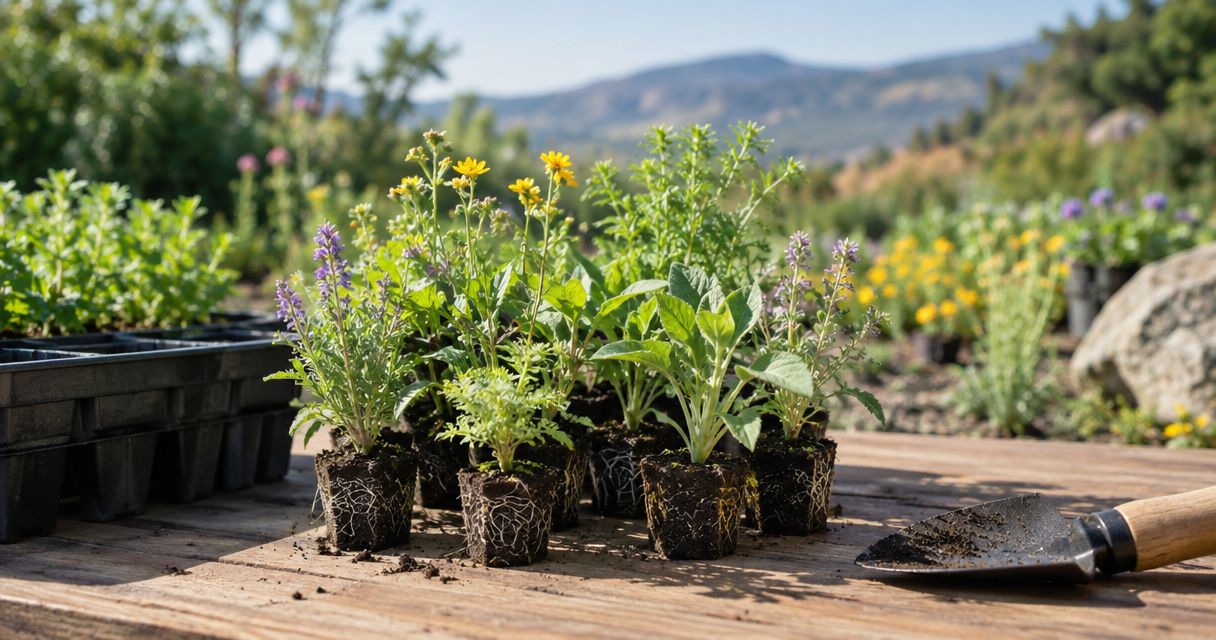
A plug is a young, rooted plant, not a seed or a mature specimen. It skips germination but still needs care while its roots grow into surrounding soil.
What makes the best beginner perennials
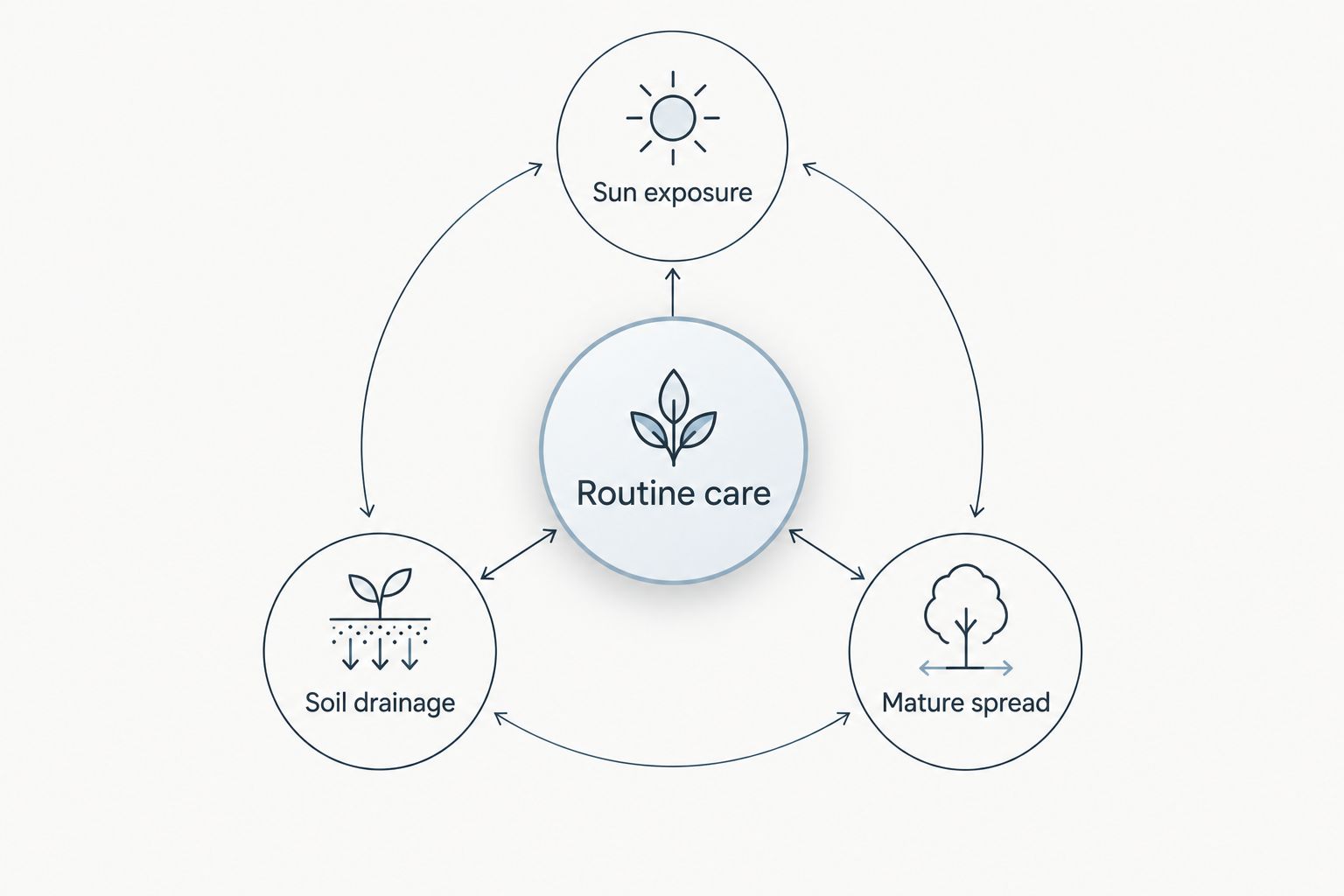
Use these criteria before choosing a plant:
- Sun exposure: Full sun generally means at least 6 hours of direct sunlight daily. Observe the actual bed, not the yard as a whole.
- Soil drainage: Match plants to soil that stays moist, drains freely, or becomes dry. Drought tolerance does not mean tolerance of standing water.
- Mature spread: Choose plants that fit the available space without repeated cutting back or division.
- Routine care: Favor plants that do not require regular staking, deadheading, or protective treatments in suitable conditions.
- Seasonal role: Decide whether you need spring flowers, summer color, autumn blooms, or evergreen foliage.
A plant earns its place by solving a specific garden need. Flower color is the final choice, not the first.
Beginner perennials at a glance: 2026 picks
These recommendations concern plant species, not verified catalogue listings. The order matches the detailed selections below.
| Perennial | Best for | Standout feature | Key limitation |
|---|---|---|---|
| Black-eyed Susan | Sunny mixed borders | Summer flowers and spreading clumps | Needs room; prolonged dampness encourages leaf problems |
| Christmas fern | Evergreen shaded beds | Winter foliage | Does not provide showy flowers |
| Butterfly weed | Dry, sunny beds | Orange flowers and monarch host foliage | Requires good drainage; resents moving |
| Creeping phlox | Sunny slopes and edges | Spring flowers over low foliage | Poor fit for wet soil or deep shade |
| Wild columbine | Part-shade spring flowers | Red-and-yellow flowers | Self-seeds; foliage can look tired later |
| Aromatic aster | Fall flowers in sunny beds | Late-season purple flowers | Spreads and needs room |
| Blue false indigo | Permanent sunny borders | Spring flowers and substantial foliage | Slow establishment and a large mature footprint |
1. Black-eyed Susan: best for sunny mixed borders
Black-eyed Susan, Rudbeckia fulgida, is the default choice for a beginner with a sunny bed and reasonably well-drained soil. Its yellow flowers bring summer color, and established clumps expand to fill gaps.
Plant it where you can accommodate that spread. Ordinary garden moisture suits it better than either persistently soggy ground or an expectation that a newly planted plug will survive without watering.
Black-eyed Susan pros:
- Summer flowers provide a clear seasonal role.
- Spreading clumps help fill a border.
- Sturdy growth usually avoids the need for staking.
Black-eyed Susan cons:
- Clumps need division or thinning when they outgrow their space.
- Damp, crowded conditions encourage leaf spotting.
Best for: A first sunny perennial border with space for clumps to expand.
Verdict: Buy for a sunny bed; skip a cramped, persistently wet corner. Confirm the species before ordering, because plants sold under the black-eyed Susan common name do not all have the same life cycle.
2. Christmas fern: best for evergreen shaded beds
Christmas fern, Polystichum acrostichoides, provides foliage rather than a flower display. Its evergreen fronds give shaded Virginia beds structure through winter, making it useful where flowers are not the main goal.
Choose partial to full shade with humus-rich, well-drained soil. Water during establishment, especially beneath trees where roots compete for moisture; shade alone does not guarantee moist soil.
Christmas fern pros:
- Evergreen foliage extends the garden's seasonal interest.
- Clump-forming growth suits a defined planting space.
- No deadheading is needed.
Christmas fern cons:
- It is not a choice for colorful blooms.
- Exposed afternoon sun and dry establishment conditions cause stress.
Best for: A shaded border needing dependable foliage rather than summer flowers.
Verdict: Buy for evergreen shade; skip hot, exposed beds. Leave healthy fronds in place and remove damaged foliage selectively rather than treating the fern like a flowering perennial that needs annual cutting back.
3. Butterfly weed: best for dry, sunny beds
Butterfly weed, Asclepias tuberosa, suits full sun and well-drained soil. Its orange flowers attract pollinators, and its foliage serves as a host plant for monarch caterpillars.
Place it carefully at the start. Its deep root system makes moving an established plant difficult, and waterlogged soil is a poor match. New plugs still need establishment watering even though established plants tolerate dry conditions.
Butterfly weed pros:
- Established plants tolerate drought.
- Summer flowers provide a distinct orange accent.
- Foliage supports monarch caterpillars.
Butterfly weed cons:
- It resents transplanting after establishment.
- It emerges late in spring, making accidental disturbance a risk.
Best for: A permanent, sunny planting area that drains freely.
Verdict: Buy for dry sun; skip soggy ground. Mark its position after planting so you do not mistake its late spring emergence for a dead plant. Accept some leaf chewing as part of its role as a host plant.
4. Creeping phlox: best for sunny slopes and edges
Creeping phlox, Phlox subulata, forms a low mat topped with spring flowers. It fits sunny border edges and well-drained slopes where an upright perennial would block the view or crowd a path.
This is a spring-flowering plant, not a source of continuous summer blooms. Give it open light and drainage, and remove weeds before they become tangled in the spreading stems.
Creeping phlox pros:
- Low growth suits the front of a border.
- Spring flowers arrive before many summer perennials bloom.
- Established plants tolerate dry conditions in suitable soil.
Creeping phlox cons:
- Wet ground and deep shade are poor matches.
- Weeding becomes awkward once grass grows through the mat.
Best for: A sunny edge or slope needing low spring color.
Verdict: Buy for a drained, sunny edge; skip a damp shaded bank. Prepare a weed-free planting area first. Low growth is useful, but it does not make creeping phlox a substitute for clearing perennial weeds.
5. Wild columbine: best for part-shade spring flowers
Wild columbine, Aquilegia canadensis, brings red-and-yellow flowers to woodland edges and lightly shaded beds. It suits a gardener who wants spring flowers without forcing a sun-loving plant into shade.
Individual plants are relatively short-lived, but seedlings can keep the planting going when conditions suit them. Later-season foliage sometimes looks tired or shows leaf-miner damage, so position it among plants that provide summer interest.
Wild columbine pros:
- Spring flowers suit a part-shade planting plan.
- Self-seeding can renew the planting.
- Flowers provide nectar for hummingbirds.
Wild columbine cons:
- Seedlings appear outside the original planting spot.
- Foliage is not consistently attractive through summer.
Best for: A lightly shaded bed where you welcome seedlings and seasonal change.
Verdict: Buy for informal spring color; skip if you require fixed clumps and pristine summer leaves. Learn to recognize the seedlings before weeding, then keep only those growing where you want them.
6. Aromatic aster: best for fall flowers in sunny beds
Aromatic aster, Symphyotrichum oblongifolium, extends the flowering season into autumn. Its purple flowers make it useful after spring and summer displays have finished.
Give it full sun, good drainage, and enough space to spread. This is a better fit for a generous border than a narrow strip where every expanding stem needs trimming.
Aromatic aster pros:
- Fall flowers extend seasonal interest.
- Established plants tolerate dry conditions.
- Late blooms provide forage for pollinators.
Aromatic aster cons:
- Spreading growth needs occasional control.
- Shade reduces flowering and encourages looser growth.
Best for: A sunny bed missing an autumn flowering plant.
Verdict: Buy for fall color with room to spread; skip a tightly packed edge. Keep neighboring plants far enough away that you can inspect the base and remove unwanted expansion. A spreading perennial is easy to manage only when its spread fits the bed.
7. Blue false indigo: best for permanent sunny borders
Blue false indigo, Baptisia australis, develops into a substantial perennial with spring flowers and lasting foliage. Its deep roots make it a strong choice for a permanent location rather than a bed you rearrange frequently.
Young plants take time to develop their mature presence. Give blue false indigo full sun and well-drained soil, then leave enough open space for its eventual width instead of crowding it with other large perennials.
Blue false indigo pros:
- Established plants tolerate drought.
- Spring flowers are followed by substantial foliage.
- Long-lived growth suits a permanent border.
Blue false indigo cons:
- Young plants do not provide an immediate full-sized display.
- Deep roots make established plants difficult to move.
Best for: A permanent sunny bed needing a substantial perennial.
Verdict: Buy for a long-term planting; wait if the bed layout is undecided. Resist filling every gap around a young plant. Space that looks empty initially is part of the planting plan, not necessarily wasted ground.
Give young plants an easier start
Meadows Garden Company flower plugs are young plants, so plan for establishment care rather than treating them like mature clumps. Check each plant's instructions and mature dimensions before setting it out.
Choose the planting window
Spring and early fall are useful planting windows for many hardy perennials in Virginia. In your 2026 garden, use soil condition, the local forecast, and the plant's hardiness to make the final decision. Avoid frozen or waterlogged ground, and do not transplant tender new growth into an expected hard freeze.
Plant at the right depth
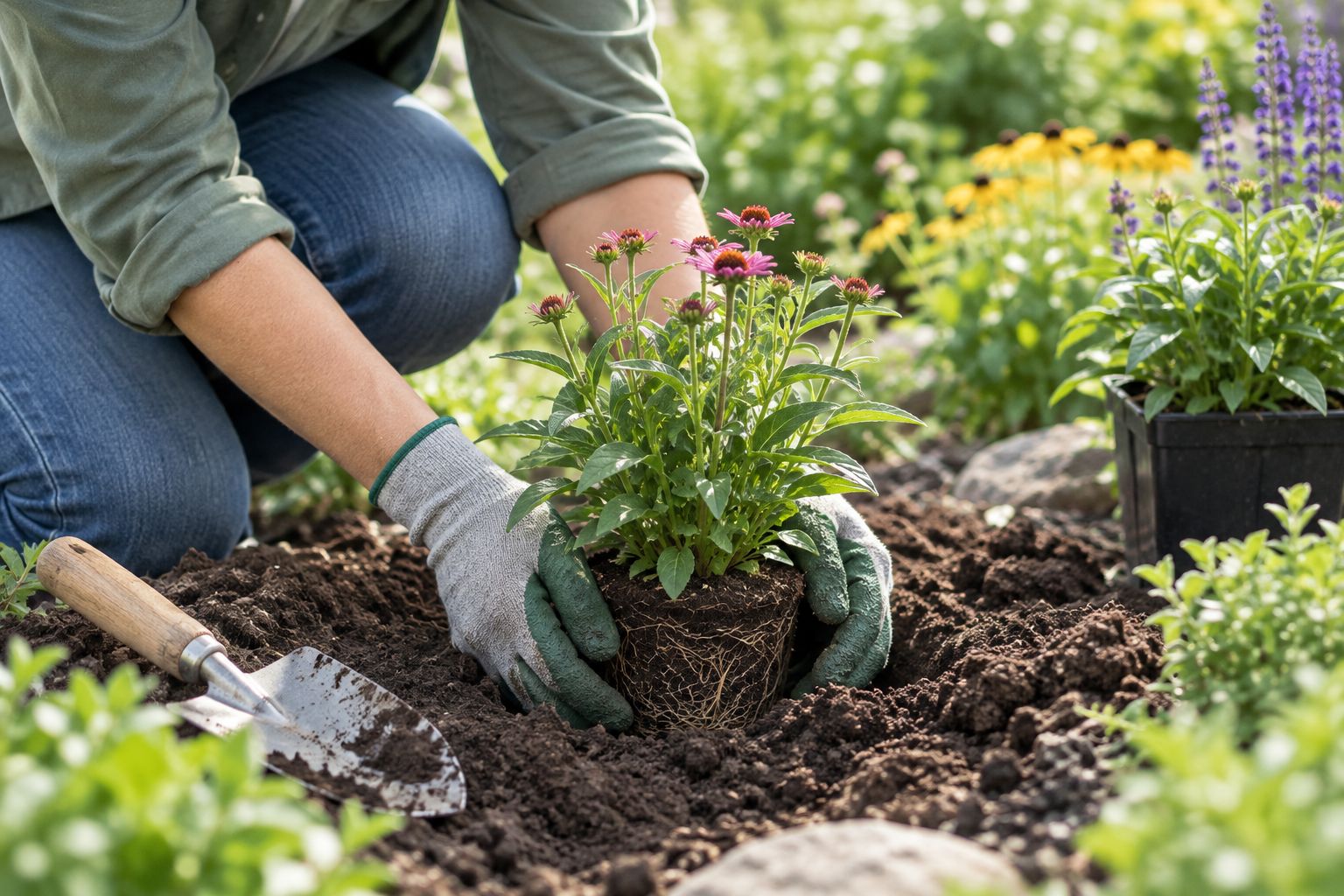
Water the root ball before planting. Set the top of the root ball level with the surrounding soil, keeping the crown from being buried. Gently firm the soil and water the planting area so roots contact moist soil rather than air pockets.
Water the root zone
Check both the plug's root ball and the surrounding soil. A small root ball can dry while nearby soil still feels damp. Water when needed rather than following an inflexible calendar, and avoid keeping the planting continuously saturated.
Mulch without burying crowns
Apply about 2–3 inches of mulch around suitable border plantings, leaving crowns clear. Mulch helps conserve moisture and suppress weeds, but it does not correct poor drainage. Dry-site plants need particular care to avoid damp material packed against their bases.
How these perennials were ranked
The 2026 ranking prioritizes site fit, routine care, mature spread, and seasonal usefulness. Black-eyed Susan takes the default slot because it suits a straightforward sunny border; the other selections address different needs rather than competing for the same location.
This is a growing-condition guide, not a claim that every plant appears in the current catalogue. Choose the species first, then check the seller's plant description and ordering details.
Which perennial should you choose?
Start with black-eyed Susan if your bed is sunny, reasonably well drained, and has room for spreading clumps. Choose Christmas fern instead when evergreen shade foliage is the goal, or butterfly weed when dry sun is the defining condition.
Meadows Garden Company is best for Virginia gardeners buying flower plugs and perennials for statewide plug shipping or Craig County pickup and local delivery.
For a manageable 2026 planting, start with 3 species that fill different seasonal roles. Repeat suitable plants rather than collecting one of everything. Check quantity options before ordering; a beginner border does not need to become a large planting project.
FAQ
What are the best low maintenance perennials for beginners in Virginia?
Black-eyed Susan is a strong default for a sunny Virginia border, while Christmas fern suits shade and butterfly weed suits dry, sunny soil. Match the plant to sunlight, drainage, and available space before choosing by flower color.
Which beginner perennial is best for shade?
Christmas fern is best for evergreen foliage in shade, while wild columbine provides spring flowers in part shade. Christmas fern needs well-drained soil, and wild columbine suits gardeners who welcome some self-seeding.
Do low-maintenance perennials need watering?
Yes, newly planted perennials need watering while their roots establish. Even drought-tolerant butterfly weed and blue false indigo need attention when young; check the root ball rather than assuming nearby damp soil is enough.
Are flower plugs the same as seeds?
No, flower plugs are young rooted plants, while seeds must germinate before producing seedlings. Plugs skip germination but are not mature plants and still need establishment care.
When should I plant perennials in Virginia in 2026?
Spring and early fall are useful planting windows for many hardy perennials in Virginia in 2026. Choose the actual planting day using local weather, soil conditions, and the plant's hardiness; avoid frozen or waterlogged soil.
Which easy perennial provides fall flowers?
Aromatic aster provides fall flowers in sunny, well-drained beds. Give it room to spread and remove unwanted expansion when it moves beyond its allotted space.
Does Meadows Garden Company ship flower plugs across Virginia?
Meadows Garden Company offers statewide plug shipping to gardeners across Virginia, plus local delivery or pickup in Craig County. Check the current catalogue for plant descriptions and ordering details before selecting varieties.
One last thing
Do not dig up butterfly weed simply because neighboring perennials have emerged first. Butterfly weed starts growth late in spring, so a quiet patch of soil does not establish that the plant has died.
Mark permanent planting positions when you set out plugs. That small task prevents accidental digging, misplaced replacements, and damage during spring weeding. Low maintenance starts with knowing what is already growing beneath the soil.