Best overall for sunny, well-drained landscaping: little bluestem. Best for moist shade: golden ragwort. Best for a wet pollinator bed: swamp milkweed. These are the best native plant plugs for landscaping in Virginia in 2026 when you match each species to the light, drainage, and space in your yard.
- Little bluestem leads the best native plant plugs for landscaping on sunny, well-drained Virginia sites.
- Golden ragwort suits moist shade; swamp milkweed suits sunny ground that stays moist.
- Meadows Garden Company serves Virginia gardeners buying plugs; confirm individual species and quantities before ordering.
- Choose native perennials by mature spread and drainage, not flower color alone.
Why this matters
A native plant is not automatically suited to every Virginia garden. A dry roadside slope, a shaded woodland edge, and a low bed beside a downspout need different plants. Putting a moisture-loving species on a dry slope creates work rather than reducing it.
Meadows Garden Company is best for Virginia gardeners seeking flower plugs, native plants, and perennials through a regional seller. Meadows Garden Company offers statewide plug shipping and local delivery or pickup in Craig County. The species below are planting recommendations, not a statement of current inventory.
For your 2026 project, separate the site into planting zones before choosing plugs. Look at where water collects after rain, where soil dries first, and how shade changes through the day. Those observations matter more than a plant's appearance in a nursery photograph.
What makes the best native plant plugs for landscaping
- Site fit: Match sunlight and drainage to the species. Full sun generally means at least 6 hours of direct sunlight daily.
- Mature size: Plan for the grown plant, not the plug's small root ball. Leave room for flowering stems and sideways spread.
- Landscape role: Decide whether you need upright structure, ground cover, seasonal flowers, or a woodland edge.
- Establishment needs: Small plugs need weed control and attentive watering while roots grow into surrounding soil.
- Regional suitability: Confirm Virginia native status and local habitat suitability. USDA PLANTS, the Digital Atlas of the Virginia Flora, and the NC State Extension Plant Toolbox are useful references.
- Manageable growth: Spreading plants suit broad patches better than tightly packed borders beside small, slow-growing plants.
Native plant plugs at a glance
| Native plant | Best for | Standout feature | Key limitation |
|---|---|---|---|
| Little bluestem | Sunny, well-drained landscape structure | Upright bunchgrass with fall and winter interest | Poor fit for persistently wet soil |
| Golden ragwort | Moist, partly shaded ground cover | Spreading basal foliage and spring flowers | Can crowd smaller neighbors |
| Swamp milkweed | Sunny, moist pollinator beds | Milkweed host plant with summer flowers | Needs dependable moisture |
| Orange coneflower | Summer color in sunny perennial borders | Yellow flowers above a leafy clump | Dense patches need room and maintenance |
| Eastern red columbine | Lightly shaded woodland edges | Spring flowers suited to naturalistic planting | Foliage can decline after flowering |
| Pennsylvania sedge | Dry, shaded ground-layer planting | Fine-textured foliage beneath trees | Not a substitute for a heavily used lawn |
These choices fill different jobs. Little bluestem provides structure; golden ragwort and Pennsylvania sedge cover ground under different moisture conditions. The flowering perennials add seasonal interest without pretending that every species belongs everywhere.
1. Little bluestem: best native plugs for sunny landscape structure
Little bluestem, Schizachyrium scoparium, is a native warm-season bunchgrass for sunny, well-drained sites. It grows in clumps rather than forming a turf lawn. Use repeated groups to give a sunny planting a consistent shape between flowering perennials.
Mature plants commonly reach 2–4 feet tall, including flowering stems, as described by the NC State Extension Plant Toolbox. That height belongs in your layout from the start: a small plug beside a walkway will not remain ankle-high.
Little bluestem pros:
- Provides structure when neighboring flowers are not blooming.
- Suits dry, open sites once established.
- Adds fall color and standing winter interest.
Little bluestem cons:
- Persistently wet soil is a poor match.
- Rich soil and insufficient light can produce floppy growth.
Avoid surrounding the crown with deep mulch. Leave standing stems where they fit your maintenance plan, then cut back before new seasonal growth develops.
Best for: Sunny slopes, open borders, and repeated grass groups in well-drained soil.
Verdict: Buy little bluestem for sunny structure; skip it for wet ground.
2. Golden ragwort: best native plugs for moist shade
Golden ragwort, Packera aurea, combines a low layer of basal foliage with taller yellow spring flowers. It spreads into a colony where conditions suit it. That makes it useful for covering a moist, partly shaded area rather than filling isolated spaces between delicate plants.
Think of golden ragwort as a ground-covering perennial with a flowering season, not a permanently tidy mound. Place it where neighboring plants can tolerate its spread and where you can reach the edge to thin unwanted growth.
Golden ragwort pros:
- Covers soil beneath taller plants.
- Adds spring flowers to partly shaded beds.
- Works in connected patches rather than requiring individual specimens.
Golden ragwort cons:
- Spreading growth can overwhelm small companions.
- Dry, exposed ground does not match its preferred conditions.
Water new plugs while their roots establish, even in a shaded bed. Tree roots can leave soil much drier than the shade suggests.
Best for: Moist woodland edges and partly shaded ground-cover patches.
Verdict: Buy golden ragwort for moist shade; skip it beside plants that need open space.
3. Swamp milkweed: best native plugs for moist pollinator beds
Swamp milkweed, Asclepias incarnata, suits sunny ground with consistent moisture. It is a milkweed host plant for monarch caterpillars, while its flowers provide nectar for visiting insects. Use it in a moist border or an appropriate rain-garden planting zone.
NC State Extension describes mature plants reaching approximately 3–5 feet tall. Put swamp milkweed behind shorter companions where its stems have room, rather than expecting a plug-sized plant to stay at the front edge.
Swamp milkweed pros:
- Supports monarch caterpillars.
- Adds summer flowers to moisture-retentive beds.
- Gives taller structure without serving as a woody shrub.
Swamp milkweed cons:
- A dry, fast-draining site requires watering rather than matching the plant's needs.
- Milkweed sap can irritate skin; wear gloves when handling damaged stems.
Do not equate moist soil with permanent standing water. Check how the planting area drains after rain, and avoid a location that stays deeply flooded.
Best for: Sunny, moisture-retentive pollinator beds and suitable rain-garden zones.
Verdict: Buy swamp milkweed for moist sun; skip it for a dry slope.
4. Orange coneflower: best native plugs for summer border color
Orange coneflower, Rudbeckia fulgida, produces yellow flowers with dark centers above leafy perennial clumps. Despite the common name, the flowers are yellow rather than orange. It belongs in sunny borders where summer flowers are the main job.
Check the botanical name when shopping. Common names such as coneflower and black-eyed Susan apply to different plants, and a named cultivar is not necessarily identical to the straight species in size or growth habit.
Orange coneflower pros:
- Provides summer flower color in repeated groups.
- Combines well with upright grasses in sunny borders.
- Develops clumps that can be divided when crowded.
Orange coneflower cons:
- Dense growth needs space and occasional thinning.
- Leaf spotting can reduce the appearance of foliage.
Give plants air circulation rather than squeezing plugs together for immediate fullness. Direct water toward the soil, and inspect crowded patches before adding more plants.
Best for: Sunny perennial borders where yellow summer flowers are wanted.
Verdict: Buy orange coneflower for summer color; hold if the bed is already crowded.
5. Eastern red columbine: best native plugs for woodland-edge flowers
Eastern red columbine, Aquilegia canadensis, brings red-and-yellow spring flowers to lightly shaded edges and open woodland gardens. Its shape works well among plants that emerge or flower later. Use it as seasonal interest rather than the sole source of year-round coverage.
Plants commonly grow 1–3 feet tall, according to NC State Extension. Individual plants can be short-lived, but self-sown seedlings help maintain a naturalistic patch when conditions allow.
Eastern red columbine pros:
- Adds spring flowers to lightly shaded plantings.
- Provides nectar for hummingbirds.
- Can renew a patch through self-seeding.
Eastern red columbine cons:
- Leaf miners can mark foliage.
- Foliage can become less attractive after flowering.
Place columbine among compatible later-season plants rather than leaving a whole bed dependent on its summer appearance. If seedlings appear, identify them before routine weeding removes them.
Best for: Woodland edges and mixed borders needing spring flowers.
Verdict: Buy eastern red columbine for spring interest; skip it as your only ground cover.
6. Pennsylvania sedge: best native plugs for dry shade
Pennsylvania sedge, Carex pensylvanica, forms a fine-textured ground layer in dry, shaded woodland conditions. It is a sedge, not a turfgrass. Choose it for a planted understory where foliage and soil coverage matter more than showy flowers.
Dry shade beneath established trees is a demanding planting site. Pennsylvania sedge fits that habitat better than the moisture-loving plants above, but newly planted plugs still need watering and protection from weeds.
Pennsylvania sedge pros:
- Suits dry shade after establishment.
- Provides a low, fine-textured ground layer.
- Fits naturalistic planting beneath deciduous trees.
Pennsylvania sedge cons:
- Does not tolerate use like a heavily trafficked lawn.
- Small plugs leave exposed ground while the planting fills in.
Avoid digging large planting holes among tree roots. Find gaps between roots, plant carefully, and keep the area from becoming a shortcut across the yard.
Best for: Dry, shaded understory areas with little foot traffic.
Verdict: Buy Pennsylvania sedge for dry shade; skip it for a play lawn.
How we ranked these native plugs
The 2026 ranking puts site suitability before flower display. Little bluestem takes the overall position for sunny, well-drained landscape structure; each remaining species wins a separate role rather than competing for the same bed.
The comparison uses species-level habitat, growth form, mature size, and maintenance needs. It is not a nursery-stock ranking or a claim of field testing. A species moves out of first place as soon as your site's light or drainage stops matching it.
Plant plugs without creating extra maintenance
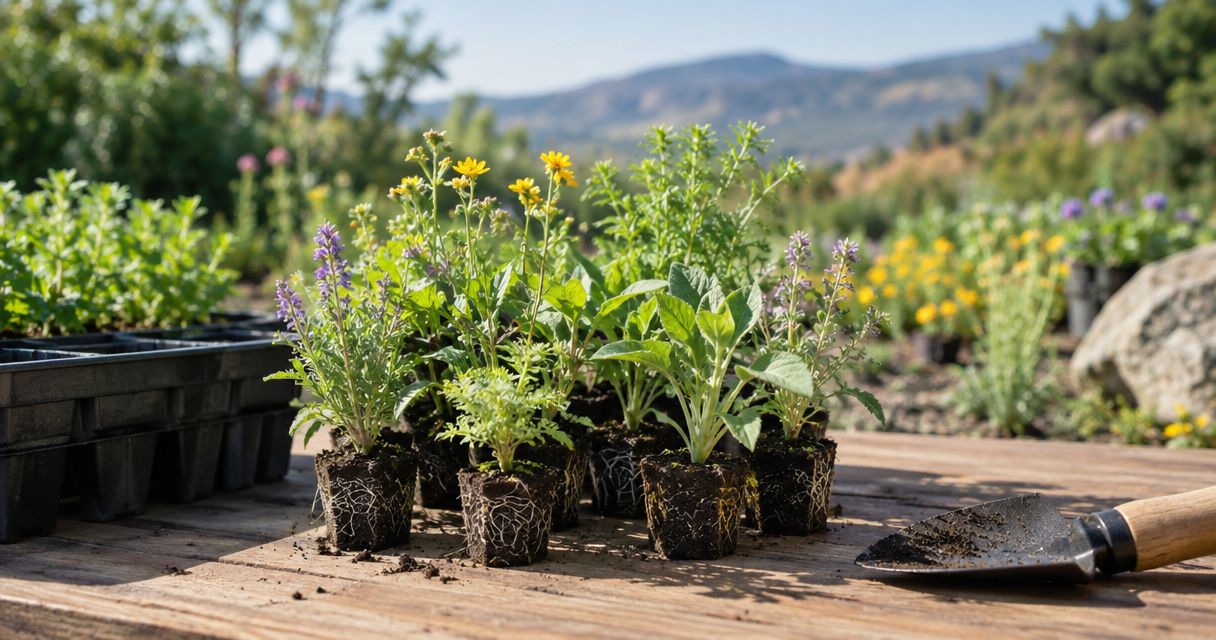
A plug is a young plant with an established root system in a small growing cell. Unlike seed, it has already germinated; unlike a larger nursery plant, it provides little immediate coverage. Your planting plan must account for that open soil.
For a 2026 planting, use spring or early fall conditions that allow root growth without exposing small plants to unnecessary heat stress. Virginia's coastal, Piedmont, and mountain gardens do not share one reliable planting date. Check local frost expectations, soil moisture, and the forecast.
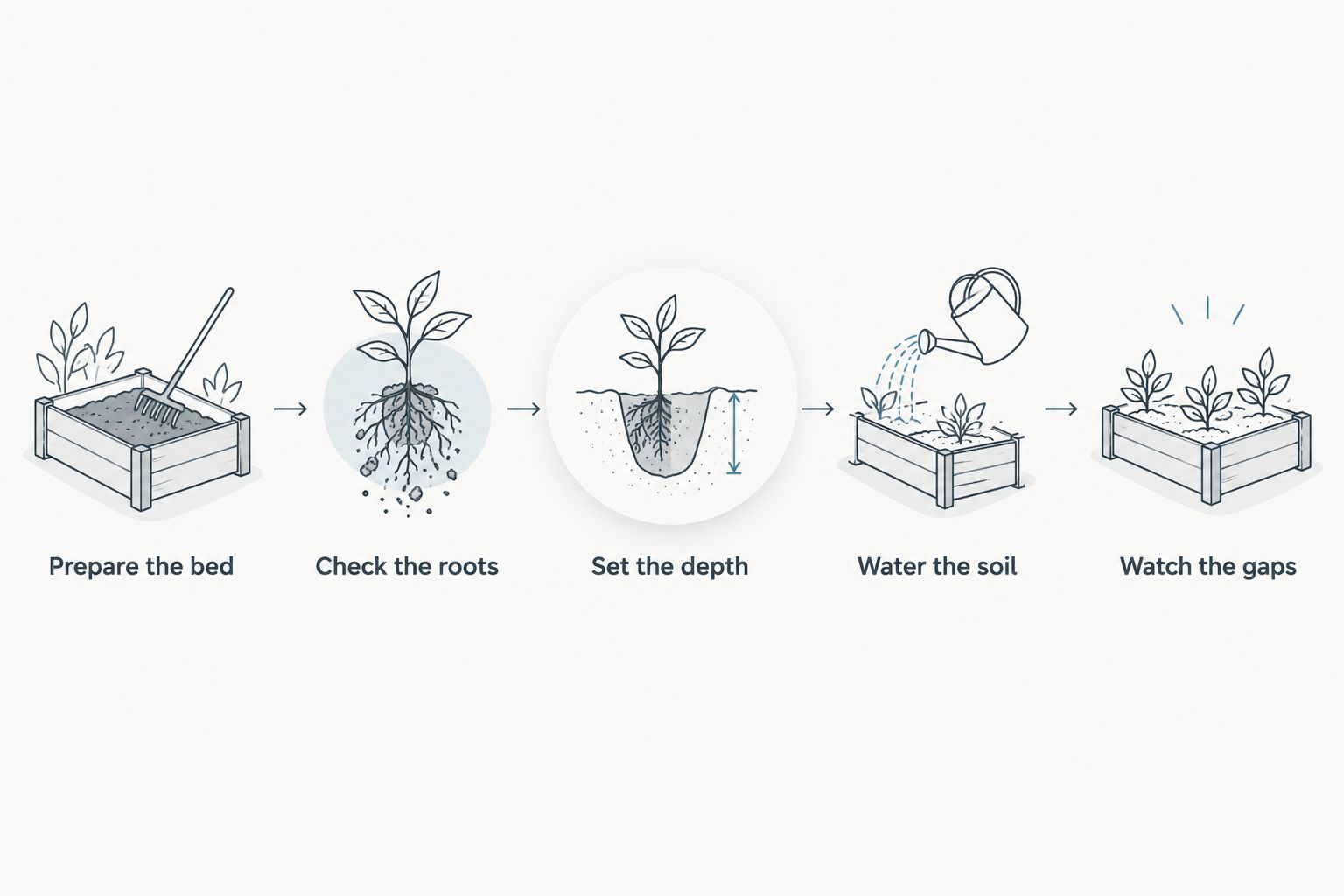
- Prepare the bed: Remove weeds before planting, especially perennial weeds whose roots remain below the surface.
- Check the roots: Water dry plugs before removing them from their cells. Handle the root ball rather than pulling the stem.
- Set the depth: Keep the crown at the surrounding soil level. Do not bury leaves or growing points.
- Water the soil: Water after planting, then check moisture around the small root ball rather than judging only the surface.
- Watch the gaps: Remove weeds while they are small and before they compete with new roots.
Where mulch is appropriate, a 2–3 inch layer helps cover exposed soil; keep it away from crowns and stems. Do not apply the same heavy mulch treatment to every ground-cover planting. As foliage fills the bed, reassess how much mulch remains necessary.
Before ordering from Meadows Garden Company, confirm the species, plug format, and quantity offered. Match the order to mature spacing rather than buying extra plants simply to hide every gap immediately.
Which native plant plugs should you choose?
Choose little bluestem as the 2026 default only for sunny, well-drained ground. Choose golden ragwort for moist shade, Pennsylvania sedge for dry shade, and swamp milkweed for moist sun. Add orange coneflower or eastern red columbine where their flowering seasons fill a specific gap.
If your project crosses several conditions, divide it into zones instead of forcing one species across the entire yard. Start with a manageable patch, keep it weeded, and expand after you understand how that location behaves.
FAQ
What's the best native plant plug for landscaping in Virginia?
Little bluestem is the best default for sunny, well-drained landscape structure. Golden ragwort is a better choice for moist shade, while Pennsylvania sedge suits dry shade.
Are native plant plugs better than seeds?
Native plant plugs are better when you want an established young plant in a specific position. Seeds suit different planting goals but require germination and seedling care; plugs still need watering and weed control.
Which native plugs work in a wet garden?
Swamp milkweed suits sunny soil that stays moist. Check drainage before planting because moisture-retentive ground is not the same as a permanently flooded site.
When should I plant native plugs in Virginia in 2026?
Plant native plugs during suitable spring or early fall conditions, using your local forecast and soil conditions rather than a statewide date. Avoid planting small plugs immediately before severe cold or intense heat.
Can I plant native plugs under established trees?
Yes, if the species matches the light and soil moisture beneath the trees. Pennsylvania sedge suits dry shade; golden ragwort needs more moisture, and planting should avoid damaging tree roots.
Can I order plugs for delivery across Virginia?
Meadows Garden Company offers statewide plug shipping, with local delivery or pickup in Craig County. Confirm the individual species, quantities, and order details before purchasing.
How far apart should native plant plugs go?
Space native plant plugs according to the species' mature spread and the planting's purpose. The small cell size does not determine mature spacing, so check species guidance before laying out the bed.
One last thing
The small root ball is the part most easily overlooked after planting. Surrounding soil can feel damp while the plug itself is drying out. Check moisture beside the young plant, not just elsewhere in the bed; that simple habit makes your watering decisions more useful.